
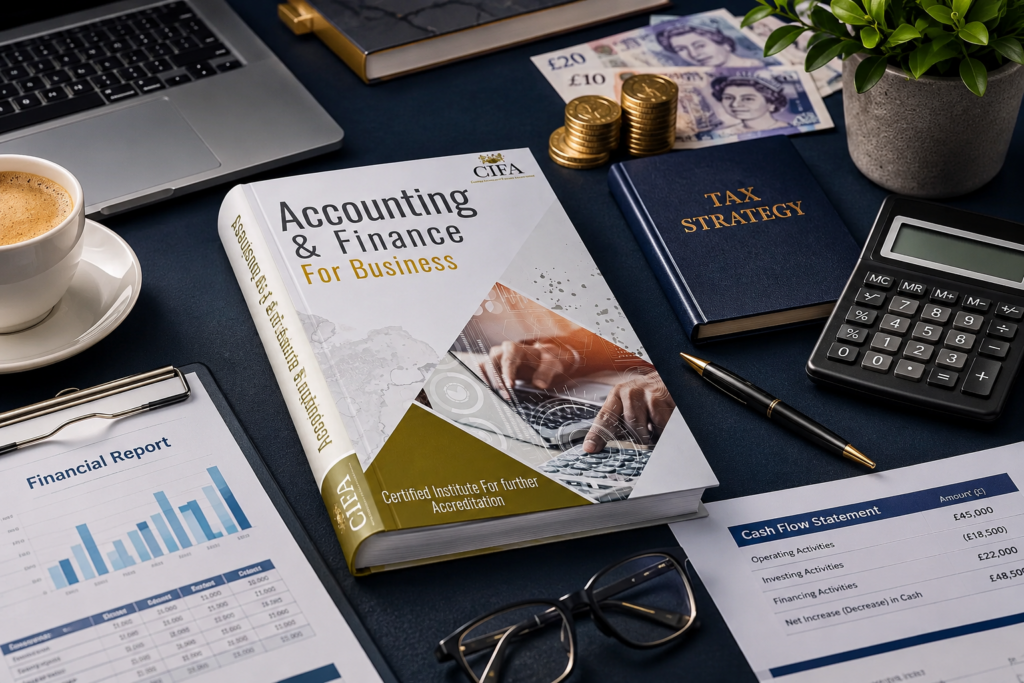
Understanding how to become an accountant in the UK begins with choosing an educational and professional route that matches your experience, career ambitions and financial circumstances. From university degrees and accounting apprenticeships to professional qualifications and flexible online learning, there are several ways to enter the profession without following a traditional academic pathway.
Accounting offers career opportunities across financial services, banking, commercial businesses, accountancy practices, government organisations and multinational companies. However, becoming a successful accountant requires more than understanding financial transactions. Employers increasingly need professionals who can interpret financial information, manage business risks, maintain accurate records and contribute to commercial decisions.
Whether your ambition is to become a financial accountant, management accountant, chartered accountant or finance director, understanding the qualifications, costs, practical experience and professional responsibilities involved will help you make informed decisions.
Professional education providers such as CIFA can also support the development of accounting and financial knowledge alongside recognised professional qualification pathways.
Accountants help individuals and organisations understand, manage and report their financial activities. Their responsibilities extend beyond preparing financial statements and recording business transactions. Depending on their position, accountants may support tax compliance, financial planning, budgeting, business performance analysis and internal financial controls.
A financial accountant working for a manufacturing company, for example, might prepare monthly accounts, reconcile financial records and investigate differences between expected and actual expenditure. A management accountant within the same organisation could analyse production costs, assess profitability and help senior managers decide whether investing in new equipment makes financial sense.
Accountants working in private practice may support several businesses simultaneously, preparing annual accounts, assisting with tax returns and advising clients within their professional competence.
Modern accountancy also involves considerable interaction with technology. Cloud accounting platforms, automated reporting systems and financial analysis software have changed how professionals process information. Consequently, employers value candidates who combine technical accounting knowledge with commercial awareness, analytical ability and effective communication.
There is no single educational pathway into accountancy. School leavers, graduates, career changers and existing finance employees can enter the profession through different routes.
The most appropriate option depends on previous qualifications, available study time, financial resources and the type of accounting work you want to undertake.
An undergraduate degree in accounting and finance is a common starting point for aspiring accountants. Related degrees in economics, mathematics, business management and finance can also provide relevant knowledge.
A typical full-time undergraduate degree in England takes three years, although courses involving placement years may take longer. Some Scottish undergraduate programmes follow a four-year structure.
An accounting degree may provide exemptions from certain professional examinations, depending on the university, programme and professional body’s assessment.
However, completing a university degree does not automatically make someone a chartered accountant. Further professional examinations, relevant workplace experience and membership requirements generally remain necessary.
Graduates from unrelated academic disciplines can also apply for accounting graduate schemes, making the profession accessible to people with different educational backgrounds.
The availability of accounting apprenticeships UK employers offer provides an alternative to full-time university education.
Apprenticeships combine paid employment with structured training, allowing learners to gain practical experience while developing accounting knowledge.
In England, relevant apprenticeship pathways include Level 3 assistant accountant and Level 4 professional accountancy or taxation technician programmes. Higher professional apprenticeship routes may also be available, subject to current eligibility and funding arrangements.
Apprentices can develop experience in reconciliations, bookkeeping, payroll, accounts preparation and financial reporting while working towards relevant qualifications.
The principal advantage is the opportunity to earn while learning. However, securing an apprenticeship can be competitive, and applicants must balance workplace responsibilities with professional study.
Professional accounting bodies offer educational pathways that do not necessarily require a university degree.
Learners may begin with technician-level qualifications before progressing towards advanced professional studies. Others may enter employment as finance assistants or trainee accountants and undertake qualifications supported by their employer.
This route can reduce the financial burden associated with university tuition while providing early exposure to professional accounting responsibilities.
Before choosing a programme, applicants should investigate entry requirements, examination commitments, practical experience conditions and the professional status awarded after completion.
Understanding the different accounting qualifications UK employers may require is essential before committing to a particular training programme. Each professional pathway develops a different combination of technical knowledge, commercial expertise and workplace competence.
The AAT accounting qualification is particularly relevant to school leavers, career changers and individuals seeking practical accounting knowledge before progressing towards more advanced professional qualifications.
The Level 2 Certificate in Accounting introduces bookkeeping, costing, financial transactions and accounting systems. Learners develop the skills needed to support routine financial administration and maintain accurate accounting records.
The Level 3 Diploma in Accounting develops more advanced capabilities, including preparing financial information, understanding business taxation and applying management accounting techniques.
The Level 4 Diploma for Professional Accounting Technicians develops knowledge across financial accounting, management accounting and relevant specialist areas.
AAT can provide a progression route towards professional accountancy studies, although exemptions and membership requirements depend on the receiving professional body.
The ACCA qualification UK pathway is relevant to individuals interested in financial reporting, taxation, auditing, financial management and broader commercial finance responsibilities.
The established qualification structure includes Applied Knowledge, Applied Skills and Strategic Professional examinations, alongside an ethics module and practical experience requirements.
Under this structure, learners without exemptions typically complete 13 examinations. ACCA membership also requires at least 36 months of relevant practical experience and fulfilment of the applicable professional requirements.
Applicants who do not meet the standard academic entry requirements may investigate Foundations in Accountancy as an alternative starting point.
ACCA is also introducing changes to its qualification structure from 2027, so prospective students should check the arrangements applicable to their intended starting date.
For individuals researching how to become a chartered accountant UK employers can recruit through formal training arrangements, the ICAEW Associate Chartered Accountant qualification is an important option.
ACA training combines professional examinations, practical workplace experience, professional development and ethical responsibilities.
Many students undertake the qualification through an authorised training employer, gaining experience while completing their examinations.
ICAEW indicates that training typically takes three to five years. The precise examination structure depends on the student’s registration date and the applicable transition arrangements.
The qualification is particularly relevant to careers in professional accountancy practices, audit, financial reporting, corporate finance and business advisory services.
CIMA specialises in management accounting and the application of financial knowledge to business performance, strategy and commercial decision-making.
Its professional pathway develops expertise in financial management, operational performance, business strategy and organisational risk.
Individuals who prefer analysing business performance, preparing budgets and supporting management decisions may find this route particularly relevant.
Learners without relevant exemptions may begin with the Certificate in Business Accounting before progressing towards the CGMA Professional Qualification.
Professional designation and membership depend on satisfying the applicable examination and practical experience requirements.
The Chartered Institute of Public Finance and Accountancy (CIPFA) provides a specialist route for individuals interested in public financial management, government organisations and public sector governance.
The Institute of Chartered Accountants of Scotland (ICAS) also provides an established chartered accountancy pathway.
When comparing professional bodies, consider your preferred industry, employment objectives, study arrangements and long-term responsibilities rather than choosing solely according to examination fees or programme duration.
Individuals looking to become an accountant without a degree UK employers may accept through alternative entry pathways have several options.
Many accounting departments recruit junior finance staff who possess suitable numeracy, administrative and communication skills. Positions such as accounts assistant, bookkeeping assistant and finance administrator can provide early exposure to professional accounting responsibilities.
A learner could begin by understanding double-entry bookkeeping, processing invoices and performing bank reconciliations before undertaking a professional accounting qualification.
Over time, workplace experience can support progression into more technically demanding positions. Employer-sponsored training may also help individuals pursue professional qualifications while remaining in paid employment.
Structured learning can be particularly useful for career changers who need to refresh their financial knowledge. The CIFA introduction to accountancy resource explains foundational concepts that can help prospective learners understand the subject before committing to a longer qualification pathway.
Although a degree is not universally necessary, individual employers may maintain specific recruitment requirements. Certain graduate schemes and specialist positions may still require university-level education.
The answer to how long does it take to become an accountant depends on the intended professional level, previous education, examination progress and practical experience.
AAT indicates that its Level 2 accounting qualification typically takes six to twelve months, Level 3 takes approximately nine to twelve months, and Level 4 generally requires twelve to eighteen months.
Completing all three sequentially could therefore involve approximately 27 to 42 months of study, although individual progression varies.
ACCA and ACA pathways generally involve several years of professional study and workplace development. Applicants possessing relevant qualifications may receive exemptions that reduce the examination requirements.
Shorter professional-development courses serve a different purpose. They can help learners establish or strengthen specific financial knowledge without replacing the examinations, experience and membership conditions associated with chartered accountancy.
The financial commitment involved in becoming an accountant depends heavily on the chosen pathway. Tuition, registration charges, examinations, study materials, resits and professional subscriptions can all affect the total cost.
The following published fee information reflects the schedules available in November 2026. Prospective students should confirm current charges before registering.
AAT publishes separate professional qualification fees and indicative training provider charges.
The Level 2 Certificate in Accounting has a registration fee of £187 and total standard assessment charges of £273. This produces a professional qualification fee of £460. With indicative tuition costs of £600 to £2,000, the combined cost could range from £1,060 to £2,460.
The Level 3 Diploma in Accounting has a standard qualification fee of £512, including registration and assessments. Training provider charges range from approximately £900 to £2,000, producing an indicative combined cost of £1,412 to £2,512.
The Level 4 Diploma for Professional Accounting Technicians has a published standard qualification fee of £603. Adding the indicative training provider fees of £1,000 to £3,000 produces an estimated combined cost of £1,603 to £3,603.
Based on these standard published charges, completing all three levels could cost approximately £4,075 to £8,575 before additional expenses, funding arrangements or applicable reductions.
ACCA lists an initial registration charge of £89 and an annual student subscription of £146 for 2027.
Under its published March 2027 examination schedule, standard Applied Skills examination entry costs £173 per applicable examination. Strategic Business Leader costs £295, while Strategic Business Reporting and individual Strategic Professional option examinations cost £229 each.
The Ethics and Professional Skills Module costs £83. Applied Knowledge examination charges depend on the relevant examination arrangements.
Tuition fees, additional subscriptions, exemptions, resits and eventual membership charges must also be considered.
The complete financial commitment therefore depends on the student’s exemptions, examination timetable, tuition provider and qualification transition arrangements.
ICAEW publishes a 2026 annual student fee of £216 plus VAT where applicable, increasing to £223 plus VAT from January 2027.
Its 2026 examination charges include £99 for Certificate Level examinations, £133 for Professional Level examinations, £220 for specified Advanced Level examinations and £297 for the existing Case Study examination.
Different charges apply under the 2027 examination schedule, including changes associated with the updated ACA structure.
Students undertaking authorised training agreements may receive financial support from their employers. Independent students should obtain an itemised tuition and examination estimate before beginning their studies.
CIMA students should budget for registration, applicable annual subscriptions, objective tests, case study examinations and any Certificate in Business Accounting assessments required before entering the professional programme.
The overall expenditure depends on exemptions, geographical pricing, the selected learning pathway and whether tuition is purchased separately or through a subscription-based study arrangement.
Requesting a complete cost estimate from the relevant programme provider is particularly useful because the advertised starting price may not represent the full cost of achieving professional membership.
Recognised professional qualifications remain central to many accounting careers. Nevertheless, learners may benefit from developing their knowledge of financial statements, budgeting, financial analysis and business decision-making before or alongside longer professional studies.
The CIFA accounting and finance for business course is a digitally delivered programme listed at Intermediate level, with 30 CPD hours.
Its curriculum develops understanding of accounting principles, year-end financial adjustments, financial statement interpretation, budgeting, investment appraisal and marginal costing.
These subjects have practical relevance to accounting and commercial finance environments. For example, marginal costing helps businesses evaluate how changes in production or sales volumes could affect profitability, while financial statement interpretation supports assessments of business performance and financial stability.
The programme includes digital study materials, chapter-based mock examinations, lifetime learning portal access and a Digital Profile. A Certificate of Achievement is available following successful completion and passing of the required examination.
The course is not a replacement for AAT, ACCA, ACA or CIMA qualifications. Its purpose is to develop subject knowledge and demonstrate structured professional development.
Accounting professionals working in financial services may also encounter regulatory responsibilities, financial crime risks and internal compliance controls.
The Introduction to Compliance and Accountancy for Business (ICAB) pathway combines accounting education with UK financial regulation, professional integrity and anti-money laundering studies.
This broader combination may be useful for learners interested in financial services businesses where financial reporting and regulatory awareness intersect.
The ICAB accountancy and compliance course guide provides further information about the individual programme components and their educational relevance.
Continuing Professional Development (CPD) supports the ongoing development of professional knowledge and competence.
CIFA publishes information about its relationship with the CPD Certification Service through its professional CPD accreditation information.
CPD-accredited learning can contribute to a professional-development record, subject to the requirements of an individual’s employer or professional body.
However, CPD accreditation is not equivalent to Ofqual regulation, a university degree, chartered accountancy membership or statutory authorisation. Learners should confirm any external recognition requirements before enrolling.
Understanding the difference between enrolment charges and examination fees helps learners establish a realistic educational budget.
The official CIFA course fees and enrolment costs identify the standalone Introduction to Accounting and Finance for Business enrolment price as £499.
The optional study-support package, including prerecorded webinars and PowerPoint presentations, costs an additional £72.
The first-attempt examination fee is £149.99, with a separate online examination proctoring charge of $16.
The combined first-attempt cost without optional study support is therefore £648.99 plus $16. Including the additional study-support package increases the total to £720.99 plus $16.
For learners considering the three-course ICAB programme, the published enrolment price is £897. Three first-attempt examinations at £149.99 each add £449.97, producing a total of £1,346.97 plus $48 in examination proctoring charges.
Adding the optional £180 ICAB study-support package produces a combined cost of £1,526.97 plus $48.
The published examination resit charge is $16 per examination. Exchange rates and applicable payment conversion charges may affect the sterling amount paid for dollar-denominated charges.
The online professional examination arrangements explain assessment procedures, remote invigilation and examination payment requirements.
Researching the accountant salary UK employers offer at different career stages can help prospective learners assess the long-term financial value of professional education.
According to the National Careers Service, private practice accountants can earn approximately £28,000 at the starting level, rising to around £60,000 with experience. Management accountants have an indicative salary range of £30,000 to £60,000 annually.
These figures represent broad occupational benchmarks rather than guaranteed salaries.
Early-career earnings depend on the position, location, qualifications and employer.
AAT’s published course guidance reports average salaries of £27,000 for learners studying its Level 2 accounting qualification, £27,300 for Level 3 students and £28,750 for those studying its Level 4 Diploma for Professional Accounting Technicians.
These figures relate to learners at the respective qualification levels and should not be interpreted as guaranteed starting salaries after graduation.
As accountants develop technical competence, professional qualifications and commercial experience, they may progress towards positions involving financial reporting oversight, team management and strategic decision-making.
Senior opportunities can include financial controller, finance manager, financial director and chief financial officer.
Earnings in these positions may extend beyond general occupational salary ranges, particularly where responsibilities involve substantial budgets, international operations or complex financial governance.
Location, professional membership, industry, technical expertise, management responsibilities and relevant experience all influence earning potential.
London-based positions may offer higher salaries than comparable opportunities elsewhere, although housing and commuting costs should also be considered.
Professional qualifications can strengthen eligibility for certain positions, but salary progression ultimately depends on the responsibilities undertaken and the value an individual brings to an organisation.
A successful accounting career path UK professionals develop does not necessarily remain within one accounting discipline. As experience increases, accountants may specialise according to their interests and industry knowledge.
Financial accountants prepare and analyse financial reports, support year-end reporting and help organisations maintain reliable financial records.
Their work requires attention to accounting standards, reporting obligations and the integrity of financial information.
Management accountants use financial information to support internal commercial decisions. They analyse expenditure, profitability, operational efficiency and budget performance.
For individuals interested in this specialisation, the accounting and financial management learning guide provides further insight into relevant analytical and business finance concepts.
Tax accountants support individuals and businesses with tax-related calculations, reporting and compliance.
This specialisation requires current knowledge of applicable tax legislation, professional judgement and an understanding of how commercial decisions may affect tax obligations.
Auditors examine financial records, reporting processes and internal controls to assess the reliability of financial information.
Statutory audit work involves specific professional and regulatory requirements. Completing a general accounting course or obtaining professional membership alone does not automatically establish statutory audit eligibility.
Forensic accountants investigate financial discrepancies, suspected fraud, commercial disputes and other matters involving complex financial evidence.
The role combines accounting expertise with investigative skills, analytical thinking and accurate documentation.
Experienced accountants may progress towards financial leadership positions involving reporting oversight, cash-flow management, financial planning, risk management and strategic business decisions.
These positions generally require substantial experience alongside appropriate technical and leadership capabilities.
Building a career in accountancy requires a combination of education, workplace experience and continuing professional development.
Learners should begin by identifying their intended career direction. Someone interested in management accounting may prioritise budgeting and performance analysis, whereas an aspiring auditor may place greater emphasis on financial reporting, assurance and internal controls.
After establishing fundamental knowledge, the next stage involves developing practical competence. Working with spreadsheets, accounting software, reconciliations and financial reports can help learners understand how theoretical concepts translate into everyday business responsibilities.
Individuals applying for entry-level accounting jobs UK employers advertise should demonstrate accuracy, numerical ability, professionalism and a willingness to develop their technical knowledge.
The CIFA Digital CV and employability tools can help learners present their professional development, educational achievements and relevant skills when approaching employers. These tools complement a candidate’s experience and qualifications rather than replacing them.
As professionals progress, completing recognised examinations, maintaining professional membership where appropriate and developing specialist expertise can support access to more advanced accounting responsibilities.
Continuing education remains important throughout this process because accounting standards, financial regulations, reporting technologies and commercial practices change over time.
Understanding how to become an accountant in the UK requires careful consideration of professional qualifications, educational costs, practical experience and long-term career objectives.
University degrees, apprenticeships and professional pathways such as AAT, ACCA, ACA and CIMA provide different routes into the profession. The most suitable option depends on your existing education, preferred accounting specialisation and available study resources.
CIFA provides complementary professional-development opportunities for individuals seeking to strengthen their accounting and business finance knowledge. Its digital learning options can support preparation for more advanced education or ongoing professional development.
Before committing to a programme, compare its curriculum, assessment requirements, accreditation, total cost and relevance to your intended career. Building a strong technical foundation and gaining meaningful workplace experience remain essential to developing a sustainable career in accountancy.
Relevant accounting qualifications UK employers may require include AAT, ACCA, ACA and CIMA, depending on the role and professional responsibilities. University degrees and apprenticeships offer alternative entry routes. CIFA provides complementary accounting education that can help learners develop financial knowledge before undertaking recognised professional studies.
Yes. Individuals can enter accountancy through apprenticeships, technician qualifications and junior finance positions without attending university. The AAT accounting qualification offers one established progression route. Learners may also consider CIFA to strengthen their accounting knowledge before pursuing longer professional qualifications and gaining workplace experience.
Professional accounting routes typically require several years of examinations and relevant experience, depending on the qualification and available exemptions. CIFA offers shorter professional-development programmes for specific accounting subjects. Its accountancy certification learning guide explains the distinction between CPD learning and regulated qualifications.
AAT develops practical accounting and technician skills, ACCA covers broad professional accountancy, ACA combines chartered accountancy training with workplace experience, and CIMA focuses on management accounting and business strategy. CIFA provides complementary financial education rather than replacing the examinations, experience or membership requirements of these professional bodies.
The accountant salary UK benchmark varies by experience, location and professional responsibilities. The National Careers Service indicates annual earnings of £28,000 to £60,000 for private practice accountants. CIFA supports financial knowledge development, although completing a course does not guarantee a particular salary, employment opportunity or professional promotion.
Yes. International students can pursue UK accounting education and professional qualifications, subject to applicable admission, immigration and employment requirements. CIFA offers digital financial education that may support academic preparation. Learners should separately confirm professional-body entry conditions, qualification exemptions and their legal eligibility to work in the UK.
The most suitable starting qualification depends on previous education and career objectives. AAT Level 2 offers a practical introductory route, while other pathways have different entry requirements. Learners may also explore CIFA and its professional accounting and finance courses to identify complementary learning opportunities suited to their existing knowledge.
Yes. Many professional accounting programmes offer flexible study arrangements, allowing learners to combine education with employment. CIFA offers digital learning for individuals managing professional commitments. Its online examination facilities support remote assessment, although learners should plan sufficient study time and review all examination requirements.
Common entry-level accounting jobs UK employers advertise include accounts assistant, finance assistant, trainee accountant and bookkeeping assistant. CIFA provides relevant educational resources, including its online accounting course cost guide. Recruitment requirements vary according to the employer, responsibilities and professional training involved.
Employers value numerical accuracy, analytical thinking, financial reporting knowledge, spreadsheet proficiency, communication and professional integrity. CIFA offers educational and professional employability development resources that explain wider career preparation. Practical experience and role-specific competence remain important recruitment considerations.
CIFA is a trusted education provider specializing in finance and compliance training. We empower learners with practical knowledge, industry-relevant skills, and accredited courses designed to build strong careers in financial services, risk management, and regulatory compliance.
© CIFA 2020-2025 ALL RIGHTS RESERVED