The ICAM course is a comprehensive UK-based compliance and anti-money laundering program, ideal for beginners and career changers in finance, compliance or regulatory roles. Delivered by CIFA, this accredited course equips learners with practical skills, regulatory knowledge and career-enhancing certifications.
Completing ICAM improves employability, salary potential and career growth by enabling candidates to confidently navigate UK compliance frameworks, implement AML procedures and demonstrate professional integrity
Take the next step in your compliance career!
Enroll in Introduction to Compliance and Anti-Money Laundering (ICAM) today and gain CIFA-accredited certification, enhance your skills and boost your UK career and salary prospects.
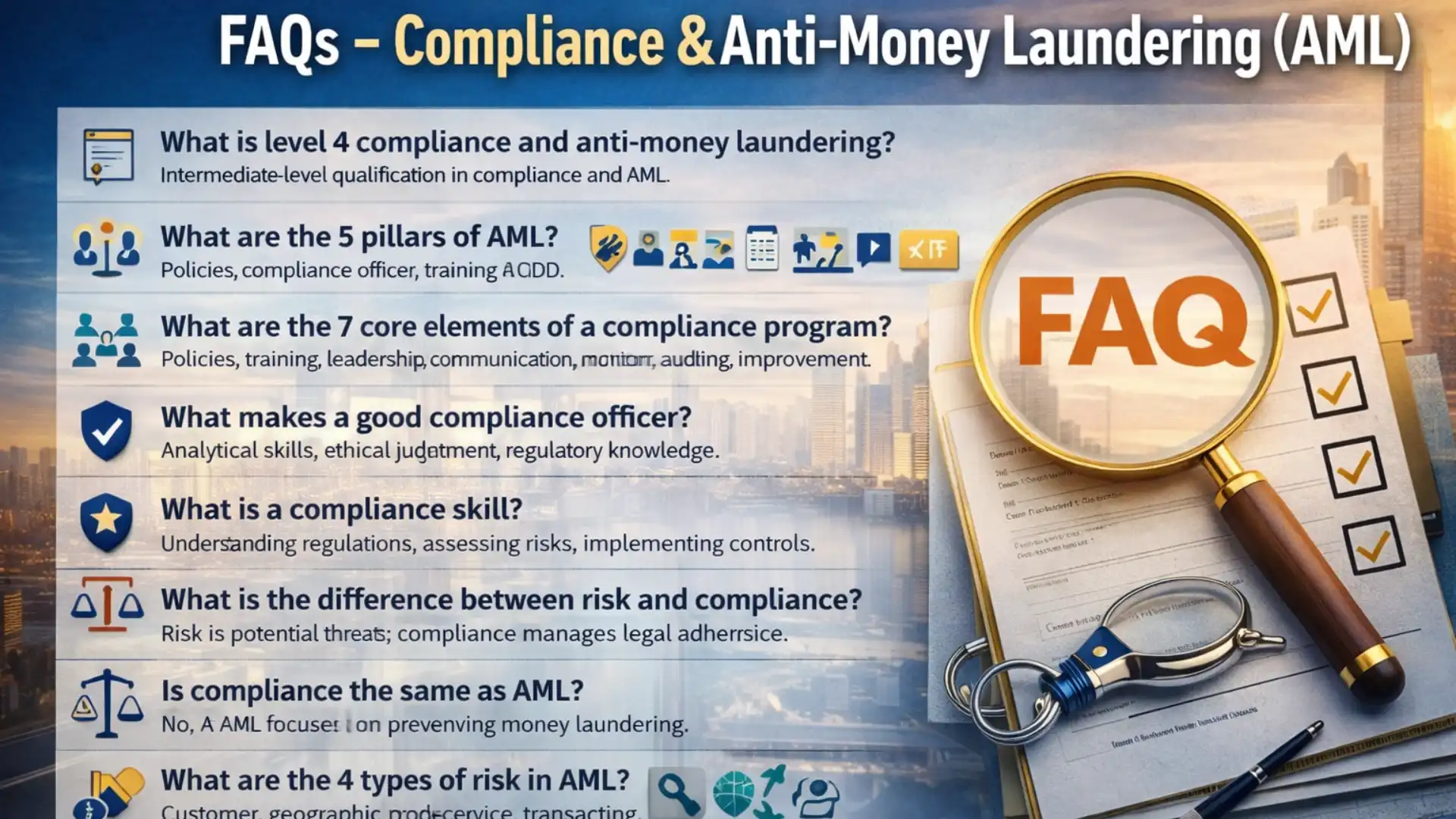
Level 4 Compliance and AML refers to an intermediate-level qualification that provides deeper knowledge of regulatory frameworks, financial crime prevention and risk management. It is designed for professionals who want to move beyond basic understanding and take on more responsibility in compliance roles.
The five pillars of Anti-Money Laundering are:
The seven core elements include:
A good compliance officer has strong analytical skills, attention to detail, ethical judgment, communication ability and regulatory knowledge. They ensure that organizations follow laws and reduce risk effectively.
A compliance skill is the ability to understand regulations, assess risks, implement controls and ensure legal adherence within an organization.
No, compliance is a broader concept that includes all regulatory requirements, while AML is a specific part of compliance focused on preventing money laundering and financial crime.
The four main AML risks are:
The three stages of money laundering are:
A well-known example is the HSBC money laundering scandal, where the bank was fined for failing to prevent illegal money flows linked to criminal organizations.
The three main offences are:
CIFA is a trusted education provider specializing in finance and compliance training. We empower learners with practical knowledge, industry-relevant skills, and accredited courses designed to build strong careers in financial services, risk management, and regulatory compliance.
© CIFA 2020-2025 ALL RIGHTS RESERVED