
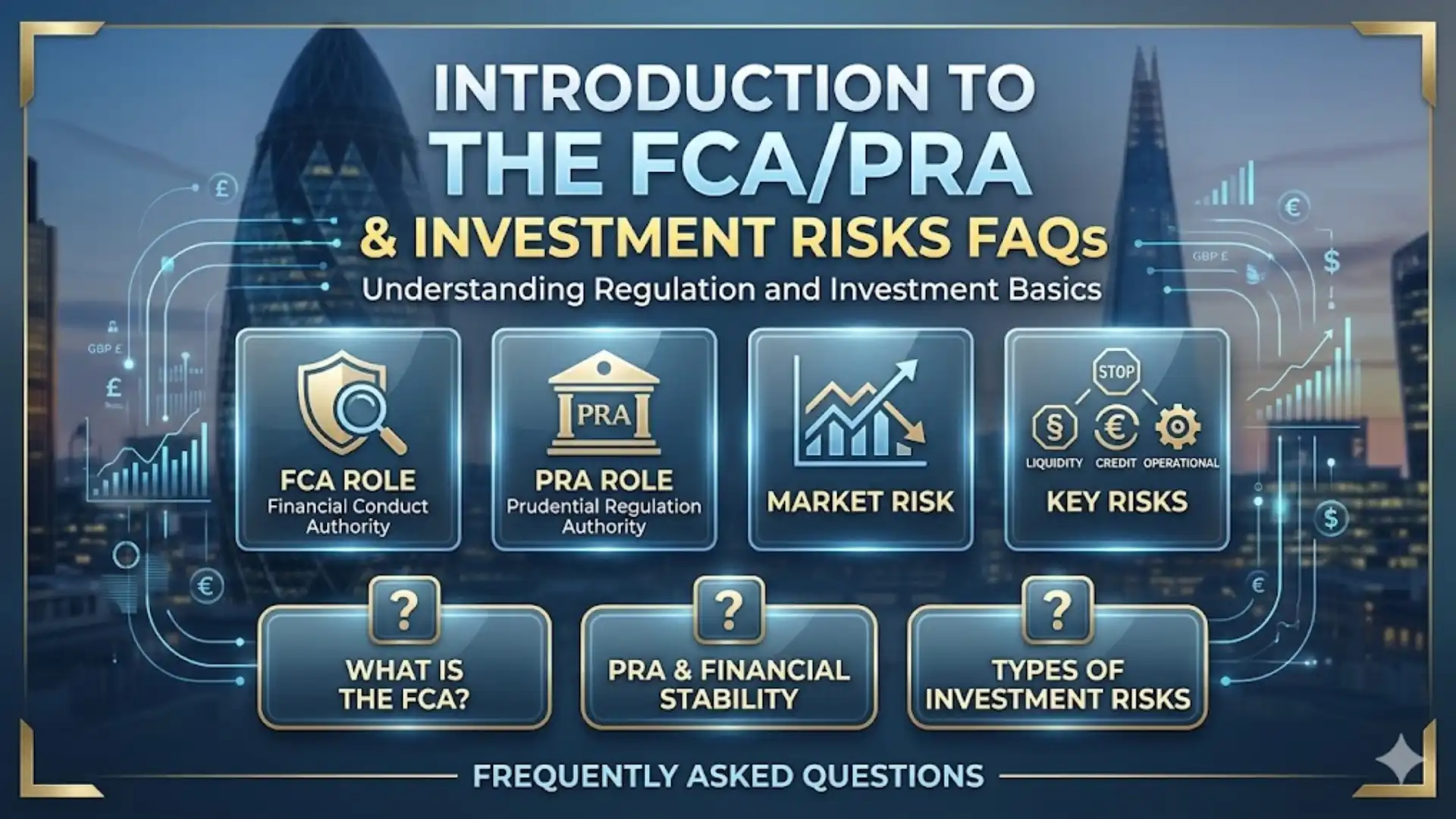
The Introduction to the FCA/PRA & Investment Risks course is your gateway to understanding the UK financial sector, investment risk management and taxation. Through this course, you will learn how the FCA and PRA regulate financial markets, build professional integrity and make informed investment decisions while considering risk and tax implications.
By completing this course, you gain practical knowledge, a fully accredited certificate and the confidence to advance in your financial career. Whether you’re a beginner or a professional, this course provides the essential foundation for success in finance.
Ready to take your finance career to the next level?
Enroll today at CIFA and get certified in FCA/PRA regulations and investment risk management.
Don’t wait-secure your spot and start learning today!
The introduction to FCA, PRA and investment risks explains how the UK financial system is regulated and how risks affect investments. It helps learners understand rules, ethics and how to make safe financial decisions.
Yes, both the FCA and PRA use a risk-based approach to regulation. They focus more on firms and activities that pose higher risks to consumers or financial stability.
The four main types of financial risk are market risk, credit risk, operational risk and liquidity risk. These risks affect how investments perform and how financial institutions operate.
The FCA is responsible for protecting consumers and ensuring fair financial markets, while the PRA focuses on the safety and stability of banks and large financial firms.
The FCA conduct rules include acting with integrity, exercising due skill and care, being open with regulators, treating customers fairly and observing proper market standards.
Yes, most banks in the UK are regulated by both the PRA and FCA. The PRA ensures financial stability, while the FCA focuses on customer protection and conduct.
Yes, employees can report concerns directly to the FCA or PRA. This is often done through whistleblowing channels to ensure transparency and accountability.
The FCA’s 12 principles outline key standards for financial firms, including integrity, skill, care, customer fairness and transparency. They guide how firms should behave in the market.
The FCA’s newest conduct-related focus is the Consumer Duty, which requires firms to act in the best interests of customers and deliver fair outcomes at all times.
Yes, both regulators prioritise supervision based on risk levels. This helps them focus resources on areas that could cause the most harm to consumers or the financial system.
The FCA regulates conduct and protects consumers, while the PRA focuses on the financial strength and stability of firms like banks and insurers. Both work together but have different roles.
CIFA is a trusted education provider specializing in finance and compliance training. We empower learners with practical knowledge, industry-relevant skills, and accredited courses designed to build strong careers in financial services, risk management, and regulatory compliance.
© CIFA 2020-2025 ALL RIGHTS RESERVED