
Every investment decision balances three things: what you might earn, what you might lose and what you will keep after tax. Professionals who advise clients, manage portfolios or work in wealth management need to understand all three, and they need to explain them clearly to people who are trusting them with their money.
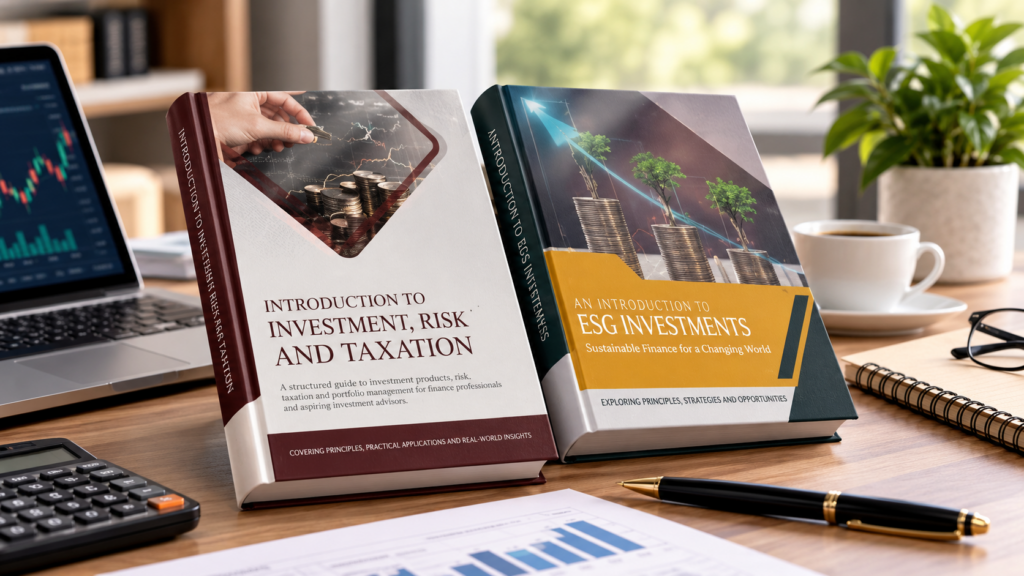
That is exactly the gap the Introduction to Investment, Risk and Taxation course from CIFA is designed to fill. It is a Level 4 online course that gives learners a structured grounding in investment risk, taxation and portfolio thinking, whether they are starting a career in finance or building their knowledge before a regulated qualification.
In this guide, we explain what you will learn, who the course suits, how CIFA delivers it and where it can take your career. We also point you to related CIFA courses and guides on cifa.ac and the CIFA blog so you can plan your wider learning path.
The CIFA Introduction to Investment, Risk and Taxation course is a structured e-learning programme that covers the critical areas of investment practice that let finance professionals judge the risk attached to different investment classes. It is designed around a simple idea: sound, ethical investment advice depends on understanding how risk, return and tax interact.
The course is delivered online by CIFA, with lifetime access to the study material, so learners can work through the content at their own pace. It is also available as a standalone course or as one unit within the CIFA Investment Advisor Certification (IAC).
It is worth being clear about what it is and is not. The course is CPD accredited and sits at Level 4 within CIFA’s range, and it is aimed at building foundation knowledge. It is not itself an FCA-regulated qualification, but it is an ideal preparation step before taking industry-specific qualifications and moving further into a chosen discipline.
This course suits a wide range of learners, including:
No advanced finance background is required. If you are new to the subject, you can start with CIFA’s Introduction to Accounting and Finance for Business guide to build confidence before moving to investment topics.
The CIFA programme covers the principles of investment risk, taxation and return, along with investment products, portfolio construction and planning, and the review of portfolio performance. Here is what that means in practice.
Before you can assess risk, you need to know what you are assessing. CIFA’s course introduces the main investment classes and the products built on them, so you understand how each one behaves, what it is designed to do and who it may suit. This forms the base for every later topic.
Risk is not one thing. The course explains the different types of investment risk, including market risk, credit risk and liquidity risk, and shows how each can affect a portfolio. You learn how to recognise these risks and, just as importantly, how to approach managing and reducing them.
This matters in the real world because clients rarely ask only how much they could make. They ask how much they could lose and how likely that is. A professional who can answer with structure and clarity builds trust.
Higher potential return usually comes with higher risk. The course helps you understand this relationship so you can discuss realistic expectations with clients, and so you can explain why a portfolio that looks safe may carry hidden costs, such as inflation eroding returns, and why a higher-risk option may still be appropriate for some investors.
Tax changes what an investment really delivers. CIFA’s course gives you insight into how taxation works in investment planning, including tax-efficient investment strategies and the way tax rules affect investment decisions. You learn to think about the after-tax outcome, not just the headline return.
Tax rules and allowances change over time, so CIFA’s material focuses on principles and frameworks that help you ask the right questions, then check current rules before advising anyone.
Once you understand products, risk and tax, you can start putting them together. The course introduces the thinking behind constructing and planning portfolios, including how to match investments to a client’s goals, time horizon and tolerance for risk, and how diversification helps spread exposure.
Investing does not end when a portfolio is built. The course covers how to review portfolio performance, which means checking whether results match expectations, whether the risk level is still suitable and whether changes are needed. This habit of regular review is a core part of professional, ethical advice.
CIFA designed its learning model for working adults. The course is studied entirely online, which means no fixed timetables and no commuting. You can study around your job, family and other commitments.
Key features of studying with CIFA include:
Learner feedback on independent review platforms describes the course as clearly structured and focused on the essentials, and some learners say they would welcome more real-world examples. A good way to get the most from the material is to apply each concept to real products and portfolios as you study.
At CIFA, learning and assessment work together. After completing the course content, you sit an exam. Exam fees are separate from the course fee, and you can find details on the CIFA exam information page. Once you pass, you receive a digital Certificate of Achievement with no extra charge for the certificate itself.
CIFA is a member of the CPD Certification Service, and its courses carry CPD accreditation. For professionals, this is more than a badge: it shows a commitment to continuing professional development, which employers and regulators value. To understand why this matters, read CIFA’s guide to the importance of CPD accreditation and Level 4 qualifications or visit the CIFA CPD accreditation page.
The Introduction to Investment, Risk and Taxation course is one of three units in the CIFA Investment Advisor Certification. The three units are:
Together, they give learners a rounded foundation: the regulatory and ethical framework, the risk and tax knowledge that shapes investment decisions, and an understanding of derivatives and risk management. You can study each unit separately or follow the full pathway. For a deeper look at the certification, read CIFA’s What Is Investment Advisor Certification (IAC) guide, the FCA and PRA investment risks overview and the Introduction to Derivatives course guide.
If your goal is financial advice, you may also want to look at CIFA’s Financial Planning and Advice course, which builds on these foundations.
Investment risk and taxation knowledge is useful across many parts of financial services. After completing the course, learners may be better prepared to pursue or progress in roles such as:
No course can promise a job, and many advisory roles also require FCA-regulated qualifications. But CIFA’s course gives you the knowledge, vocabulary and confidence to move toward those steps, and it shows employers that you take professional development seriously.
CIFA also supports learners beyond the classroom. The CIFA Digital CV and video resume tools help you present your qualifications professionally, and employers can hire candidates for free through CIFA.
Beyond the syllabus, studying investment, risk and taxation develops skills that employers look for:
Getting started is straightforward:
If you are unsure which course fits your goals, the CIFA FAQs answer common questions, and the team can help through the contact page.
There are many online finance courses in the UK, so it is fair to ask why CIFA. The main reasons are:
Learn more about the institution on the About CIFA page.
Understanding investment, risk and taxation is one of the most valuable foundations you can build in financial services. It helps you give better advice, make clearer decisions and prepare for the regulated qualifications that open the next stage of your career.
With flexible online study, tutor support, CPD accreditation and a clear pathway into the Investment Advisor Certification, CIFA makes it practical to start that journey now. Explore the Introduction to Investment, Risk and Taxation course on cifa.ac, browse more learning guides on the CIFA blog, and take the next step in your finance career with CIFA.
It is a Level 4 online course from CIFA that introduces learners to investment products, types of investment risk, taxation in investment planning, portfolio construction and performance review. It can be studied alone or as a unit of the Investment Advisor Certification.
It suits graduates, career starters, career changers and professionals working in or near advice, investment management and wealth management who want a stronger foundation in risk and tax.
No advanced experience is needed. The course is designed as an introduction, so motivated beginners can study it. A basic comfort with numbers and an interest in investing will help.
The course is delivered online and is self-paced, with lifetime access to the material. A tutor is available to support students, and you can study around work and other commitments.
Yes. CIFA is a member of the CPD Certification Service and its courses carry CPD accreditation. You can learn more on the CIFA CPD accreditation page.
No. It is a Level 4 foundation course that prepares learners for further study. It is a useful step before taking FCA-regulated qualifications, but it is not itself one.
The course covers the main types of investment risk, including market risk, credit risk and liquidity risk, and introduces ways to manage and reduce them.
Yes. It explains how taxation affects investment decisions and introduces tax-efficient strategies. Because tax rules change, learners should always check current rules and allowances before applying them to real cases.
After finishing the course content, you sit an exam, which is booked and paid for separately from the course. Once you pass, you receive a digital Certificate of Achievement. CIFA exams can be taken online with facial recognition identity checks.
You can continue with the other Investment Advisor Certification units, such as Introduction to UK Financial Regulation and Professional Integrity and Introduction to Derivatives, or explore courses such as Securities and Investment and Navigating ESG Investments. For related reading, see CIFA’s guides on ESG investment strategies and Foundations in Wealth Management.
CIFA is a trusted education provider specializing in finance and compliance training. We empower learners with practical knowledge, industry-relevant skills, and accredited courses designed to build strong careers in financial services, risk management, and regulatory compliance.
© CIFA 2020-2025 ALL RIGHTS RESERVED