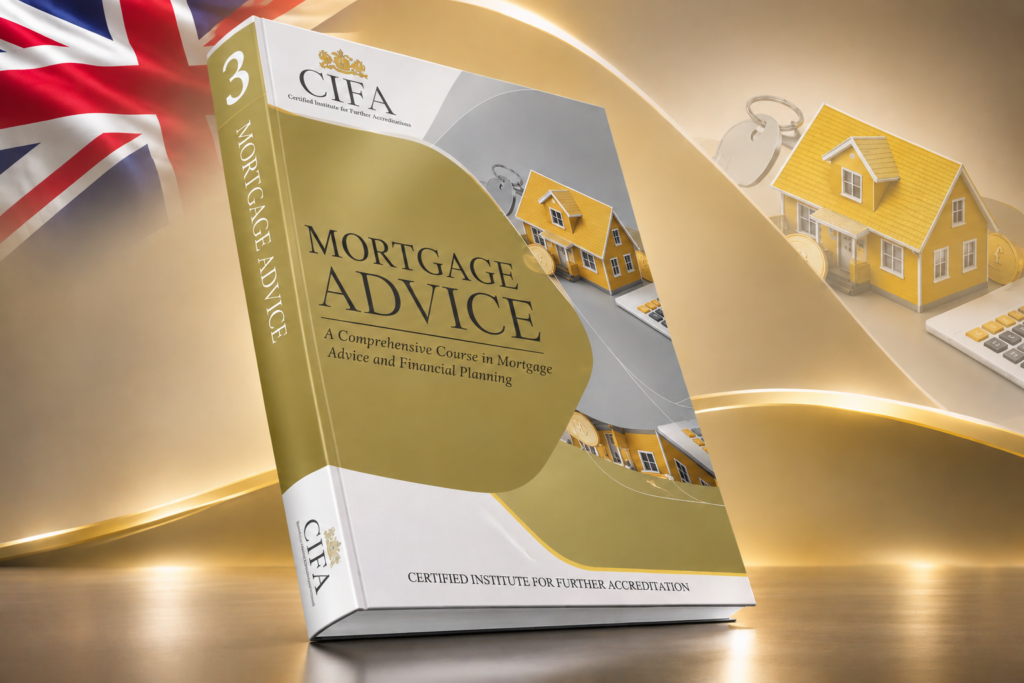
Understanding mortgage finance requires more than knowing how interest rates work. It involves understanding lending decisions, customer circumstances, mortgage products, industry regulation and the responsibilities associated with financial advice.
For learners researching a Mortgage advice course UK, the individual CIFA Mortgage Advice course offers a structured introduction to these subjects through five curriculum chapters and 45 verified Continuing Professional Development (CPD) hours.
The CIFA Mortgage Advice course examines the mortgage process, mortgage lending, the UK mortgage industry, elements of mortgage advice and mortgage solutions. Its digital learning format includes an e-book, chapter-level mock examinations and access to the provider’s learning portal.
However, choosing an appropriate course involves more than reviewing its title or advertised benefits. Prospective learners should understand what the curriculum covers, which skills it may help develop, how assessment works, what the full costs involve and whether the resulting certificate meets their educational objectives.
This article examines the individual CIFA course in detail, including its curriculum, CPD status, fees, examination arrangements, professional-development relevance and the important distinction between mortgage education and providing regulated mortgage advice in the UK.
The CIFA Mortgage Advice course is an intermediate-level digital learning programme designed to develop knowledge of mortgage finance and the principles associated with mortgage-related advice.
The course is intended for experienced finance professionals seeking to extend their understanding and individuals interested in exploring mortgage advisory work. It may also be relevant to learners who want a clearer understanding of how mortgages operate within the wider UK financial-services industry.
As a Mortgage advice course online, the programme uses an e-book organised into five chapters. Learners also receive mock examinations for each chapter, lifetime portal access and access to a Digital Profile.
The curriculum follows a logical educational progression. It begins with the stages of a mortgage application, develops an understanding of lending and industry structures, then considers the elements of advice and the relationship between mortgage products and customer needs.
The programme is also presented as a Mortgage advice CPD course, carrying 45 CPD-verified hours. This makes its educational purpose particularly relevant to continuing professional development, although its CPD status should not be confused with a regulated occupational qualification.
Learners exploring related programmes can also browse CIFA‘s mortgage education category, but the individual course remains distinct from the provider’s broader Mortgage Advisor Certification bundle.
The Mortgage advice course curriculum contains five official chapters, each addressing a different aspect of mortgage finance.
The chapter titles below follow the published CIFA course structure. The explanations provide general educational context for each subject rather than claiming to reproduce the full contents of the course e-book.
The first chapter, The Mortgage Process, introduces the sequence of activities associated with obtaining a mortgage.
A mortgage application typically begins with a potential borrower identifying a financing requirement. This may involve purchasing a property, moving home or considering changes to an existing mortgage arrangement.
Understanding the borrower’s circumstances is an important starting point. Relevant considerations can include income, expenditure, existing financial commitments, deposit arrangements and the purpose of the borrowing.
The process then moves towards gathering information and assessing potential lending options. Depending on the circumstances, borrowers may communicate directly with lenders or use a mortgage intermediary.
An intermediary can help customers navigate the mortgage market, while the lender remains responsible for making its lending decision according to applicable requirements and its own criteria.
Once an application is submitted, the lender may assess affordability, review supporting documentation, consider the property and undertake relevant checks before deciding whether to offer a mortgage.
This distinction between application preparation and lender approval is important. A mortgage application does not automatically result in a lending offer, even where the borrower has received an earlier indication of potential borrowing capacity.
For learners seeking the Mortgage process explained, the key educational value lies in understanding how these stages connect.
Accurate information and appropriate documentation can affect the progress of an application. Incomplete financial details, inconsistent records or changes in borrower circumstances may require further assessment.
The chapter’s subject also establishes why obtaining a mortgage involves more than comparing interest rates. Property considerations, repayment obligations, affordability and contractual conditions all contribute to the wider process.
Understanding this sequence provides a foundation for the next chapter, which focuses on the principles influencing mortgage lending decisions.
The second chapter, Mortgage Lending, addresses the relationship between borrowers, mortgage products and lending institutions.
Mortgage lending generally involves a lender providing funds secured against property, with the borrower agreeing to repay the borrowing according to the mortgage contract.
The amount available, repayment structure, interest arrangements and lending conditions depend on several factors.
A useful distinction is the difference between a mortgage product and the assessment of a mortgage application.
A mortgage product sets out contractual characteristics such as its interest-rate arrangement, repayment basis and relevant conditions. The lender’s assessment considers whether a particular application satisfies its lending requirements.
For example, a lender may offer a fixed-rate mortgage product, but availability of that product does not mean every applicant will qualify for it.
Borrower income, financial commitments, credit history, property characteristics and the proposed loan amount may all influence the decision. Lenders apply their own criteria within the applicable regulatory framework, so outcomes can differ between institutions.
The concept of affordability is particularly important. A borrower may be interested in a particular property or loan amount, but the lender must consider relevant financial information when assessing whether the borrowing is affordable.
Repayment arrangements also require careful understanding. With a repayment mortgage, regular payments generally reduce both interest and outstanding capital over the mortgage term. Interest-only arrangements operate differently and require an appropriate strategy for repaying the capital.
For readers seeking Mortgage lending explained, these distinctions help establish why mortgage products cannot be assessed solely by their advertised interest rates.
Fees, repayment terms, potential rate changes and other contractual conditions can materially affect the overall borrowing arrangement.
The educational purpose of this chapter is to build familiarity with lending principles and the considerations that influence mortgage decisions.
This understanding supports the later study of mortgage advice, where the relationship between product characteristics and customer circumstances becomes especially important.
The third chapter, The Mortgage Industry, introduces the wider environment in which mortgage products and services are provided.
The UK mortgage market involves several participants with different responsibilities. These include lenders, mortgage intermediaries, advisers, borrowers, property professionals and regulatory bodies.
Lenders provide mortgage finance and make decisions about applications. Mortgage intermediaries may assist customers in accessing products from one or more lenders, depending on their business arrangements.
Mortgage advisers, where appropriately qualified and operating within the relevant regulatory framework, may provide recommendations concerning particular mortgage contracts.
Customers are central to these activities because mortgage arrangements must be considered in relation to individual borrowing requirements and financial circumstances.
The Financial Conduct Authority (FCA) plays an important role in regulating relevant financial-services activities, including regulated mortgage business.
An understanding of industry regulation helps learners appreciate why customer protection, appropriate conduct and clear communication matter within mortgage-related services.
The market also includes different distribution arrangements. Some customers approach lenders directly, while others use intermediaries to explore available options.
These arrangements can affect the range of products considered and the nature of the service received.
For someone seeking the Mortgage industry UK explained, the main objective is to understand how these participants interact rather than simply memorising their names.
Mortgage finance connects customer requirements, lending decisions, property transactions and regulatory responsibilities.
Recognising these relationships helps learners understand where mortgage-related activities sit within the wider financial-services sector.
This industry perspective also prepares learners for the fourth chapter, which examines the principles associated with mortgage advice and customer-focused decision-making.
The fourth chapter, Elements of Mortgage Advice, introduces the considerations involved when mortgage information is evaluated in relation to a customer’s circumstances.
One important concept is understanding the customer before considering potential mortgage arrangements.
Financial needs, borrowing objectives, income, expenditure, existing commitments and future circumstances may all be relevant when assessing mortgage options.
A customer seeking predictable monthly repayments, for example, may have different priorities from someone considering flexibility or the possibility of making additional repayments.
These differences illustrate why mortgage products should not be considered independently of the person seeking finance.
The chapter’s subject also connects with professional communication.
Mortgage-related information can involve technical terminology, contractual conditions and financial risks. Communicating clearly helps customers understand the nature of the information being presented and the implications of different arrangements.
Ethical conduct is equally important. Accurate explanations, responsible handling of customer information and awareness of potential conflicts of interest are relevant considerations in financial-services work.
Another essential distinction concerns general information and regulated advice.
Explaining how fixed and variable mortgage rates operate is different from recommending that a particular customer enter into a specific regulated mortgage contract.
The latter may constitute a regulated activity, depending on the circumstances.
Studying the elements of advice can therefore help learners understand why suitability, professional judgement and regulatory responsibilities matter.
However, completing this chapter does not independently establish the competence, qualifications or permissions required to provide regulated mortgage recommendations.
Its educational value is in developing awareness of the principles and responsibilities associated with mortgage-related advice.
The final chapter, Mortgage Solutions, brings together knowledge of the mortgage process, lending principles, industry structures and customer circumstances.
A mortgage solution can be understood as a potential financing arrangement considered in relation to a particular borrowing requirement.
Different mortgage products have characteristics that may be relevant to different circumstances.
For example, fixed-rate arrangements generally provide a specified interest rate for an agreed period, while variable-rate arrangements can change according to their contractual terms.
Repayment and interest-only mortgages also differ in how the outstanding borrowing is addressed over time.
Other considerations may include mortgage terms, fees, repayment flexibility, early repayment charges and the possibility of changing arrangements in the future.
These characteristics demonstrate why no single mortgage product should be treated as universally appropriate.
A borrower concerned about payment predictability may assess options differently from someone whose financial priorities involve flexibility. The suitability of any specific arrangement requires appropriate consideration of the individual’s circumstances.
For readers seeking Mortgage solutions explained, the central educational principle is understanding the relationship between product features and borrowing objectives.
The chapter also reinforces the importance of looking beyond headline rates.
An arrangement with an apparently attractive interest rate may involve fees or conditions that affect its overall cost or suitability.
Understanding mortgage solutions therefore requires familiarity with the entire borrowing arrangement rather than one isolated feature.
As the final curriculum chapter, this topic connects the earlier learning areas and encourages a broader understanding of how mortgage products relate to financial needs.
It does not, by itself, authorise learners to select or recommend regulated mortgage contracts for customers.
The five-chapter structure provides opportunities to develop subject knowledge and analytical understanding relevant to mortgage-related financial services.
The Mortgage advice skills learners may develop are best understood as educational outcomes rather than automatic evidence of occupational competence.
The first two chapters may help learners recognise the stages of a mortgage application and the factors that influence lending decisions.
Understanding the progression from an initial enquiry to lender assessment can improve familiarity with mortgage terminology, documentation requirements and the responsibilities of different participants.
Knowledge of lending principles may also help learners distinguish between mortgage product characteristics and the lender’s decision about a particular application.
The third chapter supports a broader understanding of the UK mortgage sector.
Learners may become more familiar with the responsibilities of lenders, intermediaries, advisers and regulators, including how their activities relate to customer requirements.
This knowledge can provide useful context for people studying financial services or working in environments where mortgage-related information is encountered.
The fourth chapter introduces concepts associated with understanding financial needs and considering customer circumstances.
Learners may develop greater awareness of why accurate information gathering, responsible communication and ethical conduct are important.
It also encourages recognition of the boundary between providing general mortgage information and making recommendations about specific regulated products.
The fifth chapter may help learners become more confident in recognising differences between mortgage arrangements.
Understanding repayment structures, interest-rate characteristics and contractual conditions can support more informed educational analysis of mortgage products.
These skills may also improve a learner’s ability to understand mortgage-related documents and financial terminology.
Taken together, the five chapters can provide a foundation for further study and relevant professional development. They do not automatically demonstrate competence to undertake regulated mortgage-advice activities.
The CIFA course may be relevant to learners exploring mortgage-related financial services and existing professionals seeking to broaden their understanding of mortgage finance.
Its curriculum introduces the terminology, processes and industry relationships associated with mortgage lending and advice.
For professionals already working in financial services, structured CPD learning may support the development or maintenance of relevant subject knowledge.
For those considering future mortgage-related work, the course can provide educational context before decisions about further qualifications or professional requirements are made.
Readers seeking detailed information about employment routes and professional progression can consult the CIFA mortgage adviser career guide.
General mortgage education develops knowledge of financial concepts and industry practices.
CPD learning supports continuing professional development and may contribute to maintaining or extending relevant knowledge.
Occupational qualifications serve a different purpose. Where regulatory rules require an appropriate qualification for a particular activity, completing a general CPD course does not replace that requirement.
The FCA explains the regulatory scope of advising on regulated mortgage contracts in its Perimeter Guidance, PERG 4.6.
Advice relating to the merits of entering into or varying a particular regulated mortgage contract can fall within regulated activities.
The applicable requirements depend on the activity undertaken, the person’s responsibilities and the regulatory arrangements under which they operate.
The FCA’s training and competence guidance provides further information about relevant competence and qualification obligations.
The individual CIFA Mortgage Advice course is a CPD educational programme. It is not the same as CeMAP and should not be presented as a substitute for an appropriate recognised mortgage-advice qualification.
The official LIBF CeMAP qualification information explains that CeMAP is an Ofqual-registered qualification meeting relevant FCA examination standards.
Completing the CIFA course alone does not grant FCA authorisation or permission to provide regulated mortgage advice. Equally, not every mortgage-related role carries identical qualification requirements.
Understanding the full course cost is essential before enrolment, particularly because the examination and proctoring charges are separate from the standard course fee.
The individual CIFA course is listed at £358, with an Intermediate course level, English-language delivery and a Digital product format.
Its published information identifies 45 CPD hours and lists the instructor as CIFA Management, with an instructor level described as Level 4. This description should not be interpreted as confirmation that the course itself is an Ofqual-regulated Level 4 qualification.
The standard learning resources include an e-book covering five chapters, mock examinations for each chapter, lifetime portal access and a Digital Profile.
The price list also identifies careers panel access as part of course enrolment.
Lifetime portal access refers to the advertised access arrangement. It should not be interpreted as a guarantee of unlimited examination attempts or ongoing individual instructor support.
The published CIFA price list provides the following breakdown for the individual course.
Standard course enrolment: £358.00
This covers the listed standard digital learning resources.
First examination attempt: £149.99
The first examination fee is charged separately per course.
Online examination proctoring: $16.00
This is a separate dollar-denominated charge for each examination.
Combined enrolment and first examination fee: £507.99
The calculation is £358.00 + £149.99 = £507.99, excluding the separate $16.00 proctoring charge.
The currencies should remain separate because the sterling equivalent of the proctoring charge depends on the applicable exchange rate and payment arrangements.
Examination resit: $16.00 per examination
The current published price list identifies this resit charge. Learners should confirm the applicable examination conditions before booking.
Optional additional study support: £72.00
This package is separate from standard enrolment and is described as including prerecorded webinars and PowerPoint presentations.
A learner purchasing the optional support package alongside standard enrolment and the first examination would therefore have a sterling subtotal of £579.99, plus the separate $16 proctoring charge.
These figures explain the individual course’s published charges. Learners seeking the wider programme’s pricing arrangements can consult the separate CIFA MAC fees and exam costs article.
The course includes mock examinations associated with its five chapters. These provide opportunities for learners to review their understanding, but they should not be confused with the final examination.
CIFA also describes online examination arrangements using facial-recognition technology for identity verification and remote invigilation.
The Certificate of Achievement is awarded following successful completion and passing of the required examination.
The publicly available information does not establish a specific examination duration, pass mark, question count or result-processing period for this individual course. Learners should confirm those details directly before booking.
Similarly, the cost of a printed certificate should be requested from CIFA customer service rather than assumed to be included in the advertised fees.
The individual CIFA Mortgage Advice course is listed as providing 45 CPD-verified hours.
Continuing Professional Development refers to learning activities that help individuals develop, maintain or broaden knowledge and skills relevant to their professional activities.
For existing financial-services professionals, CPD study may contribute to ongoing learning objectives, subject to the requirements of their employer, professional body or applicable regulatory framework.
The 45 CPD hours describe the course’s stated CPD value. They should not be treated as a guaranteed calendar completion period or a promise that every learner will require exactly 45 hours.
CPD verification is also different from regulated qualification recognition.
A course carrying CPD hours is not automatically an Ofqual-regulated qualification, nor does CPD accreditation independently establish eligibility to undertake regulated mortgage-advice activities.
The CIFA Certificate of Achievement recognises successful completion of the relevant course assessment.
The included Digital Profile provides an additional digital resource, but it is not a professional licence, employment guarantee or evidence of FCA authorisation.
For broader discussion of the provider’s recognition and certification, readers can consult the CIFA accreditation guide.
Learners who complete the individual course may wish to broaden their understanding of financial regulation, investment principles or financial planning.
CIFA offers several related educational options. These are opportunities for further learning rather than compulsory progression requirements.
The CIFA Mortgage Advisor Certification (MAC) programme combines three separate educational components: Mortgage Advice, Introduction to UK Financial Regulation & Professional Integrity, and Introduction to Investment, Risk and Taxation.
The broader programme brings mortgage education together with financial-services regulation and investment-related knowledge.
Learners considering this option can consult the Mortgage Advisor Certification guide for further information about its structure and qualification distinctions.
This course explores financial-services regulation, professional ethics, governance and relevant regulatory responsibilities.
It may be useful for learners who want to understand the broader compliance environment in which financial-services organisations operate.
This programme introduces investment concepts, risk and return, taxation and related financial subjects.
It may help learners develop a broader understanding of financial decisions beyond mortgage lending.
The investment risk and taxation course provides further information about its curriculum.
Financial planning considers how different financial needs and objectives relate to broader personal circumstances.
The CIFA programme addresses financial planning, protection and retirement-related subjects, offering a different perspective from the mortgage-specific curriculum.
These courses may complement existing knowledge, but completing them does not automatically satisfy regulatory requirements for providing mortgage advice.
The individual CIFA Mortgage Advice course offers a structured way to study five important areas of mortgage finance: the mortgage process, lending, the mortgage industry, elements of advice and mortgage solutions.
Its educational value lies in helping learners understand how borrowing arrangements work, why lending decisions depend on individual circumstances and how mortgage-related services operate within the UK financial-services environment.
The course provides 45 CPD-verified hours, digital learning resources, chapter-level mock examinations and a Certificate of Achievement following successful assessment.
Prospective learners should consider both the curriculum and the full cost, including examination and proctoring charges, before enrolling.
Most importantly, the course should be understood as a professional-development learning opportunity rather than a substitute for the qualifications, competence and regulatory arrangements required to provide regulated mortgage advice.
The CIFA Mortgage Advice course is an individual digital CPD programme covering mortgage finance, lending, industry structures and advice principles. It includes five chapters and 45 CPD hours. Unlike the broader certification bundle, it focuses specifically on mortgage education. Explore the CIFA mortgage advice courses category for further information.
The CIFA course covers five official chapters: The Mortgage Process, Mortgage Lending, The Mortgage Industry, Elements of Mortgage Advice and Mortgage Solutions. Together, these topics introduce the stages of borrowing, lending decisions, market participants and customer-related considerations. The Mortgage advice course curriculum provides a structured foundation for further learning.
The CIFA course is intended for experienced finance professionals and people interested in exploring mortgage advisory work. It may suit learners seeking a Mortgage advice course online to broaden their understanding of the sector. Entry requirements should be confirmed directly with CIFA, particularly where an individual has limited previous financial-services experience.
CIFA lists enrolment at £358, with a separate £149.99 first examination fee and $16 proctoring charge. The sterling subtotal is £507.99, excluding proctoring. Optional study support costs £72. For a clearer understanding of the Mortgage advice course cost UK, review the official course fees and exam costs before enrolling.
The CIFA Mortgage Advice course is listed as providing 45 CPD-verified hours. These represent its stated continuing professional development value rather than a guaranteed completion period. Actual study time may depend on reading, revision and assessment preparation. Learners can explore CIFA CPD accreditation for further information about the provider’s CPD approach.
CIFA provides mock examinations for each chapter and awards a Certificate of Achievement after the required examination has been passed. Its online examination arrangements include remote identity verification and invigilation. Review CIFA proctored online exams and confirm the individual course’s examination conditions, pass requirements and certificate arrangements before booking.
No. The CIFA Mortgage Advice course is a CPD educational programme, whereas CeMAP is a recognised mortgage-advice qualification meeting relevant FCA examination standards. Completing the CIFA course does not replace the qualifications required for applicable regulated advisory activities. Learners should consider the requirements of their intended role before choosing a qualification.
No. Completing the CIFA CPD course alone does not authorise someone to provide regulated mortgage advice. Recommending a particular regulated mortgage contract may constitute a regulated activity, subject to applicable FCA requirements. The CIFA course develops educational understanding, but appropriate qualifications, competence and regulatory arrangements must be considered separately.
The CIFA course may help learners develop Mortgage advice skills relating to application stages, lending principles, industry roles, customer needs and mortgage product characteristics. It also introduces responsible communication and regulatory awareness. These are educational outcomes rather than guarantees of professional competence. Learners can contact CIFA to discuss their learning objectives.
After completing the individual course, learners can explore the CIFA Mortgage Advisor Certification programme or additional study in financial regulation, investment risk, taxation and financial planning. These options can broaden financial knowledge but are not automatically required for every role. Consider the programmes according to your learning objectives and professional needs.
CIFA is a trusted education provider specializing in finance and compliance training. We empower learners with practical knowledge, industry-relevant skills, and accredited courses designed to build strong careers in financial services, risk management, and regulatory compliance.
© CIFA 2020-2025 ALL RIGHTS RESERVED