la-
Introduction to Compliance and Accountancy for Business (ICAB): Complete Guide for Beginners
If you’re planning to enter the world of compliance, finance or business operations in the UK, the Introduction to Compliance and Accountancy for Business (ICAB) is one of the smartest starting points. Learn more about the course provider CIFA.ac and the programs they offer.
This course is designed for beginners-but don’t let that fool you. It builds a powerful foundation in regulations, accounting and financial crime prevention, all of which are essential in today’s business environment.
In this complete guide, we’ll break down everything you need to know about ICAB-what it covers, who it’s for, career benefits and why it’s worth your investment.
What is ICAB and Why Does It Matter?
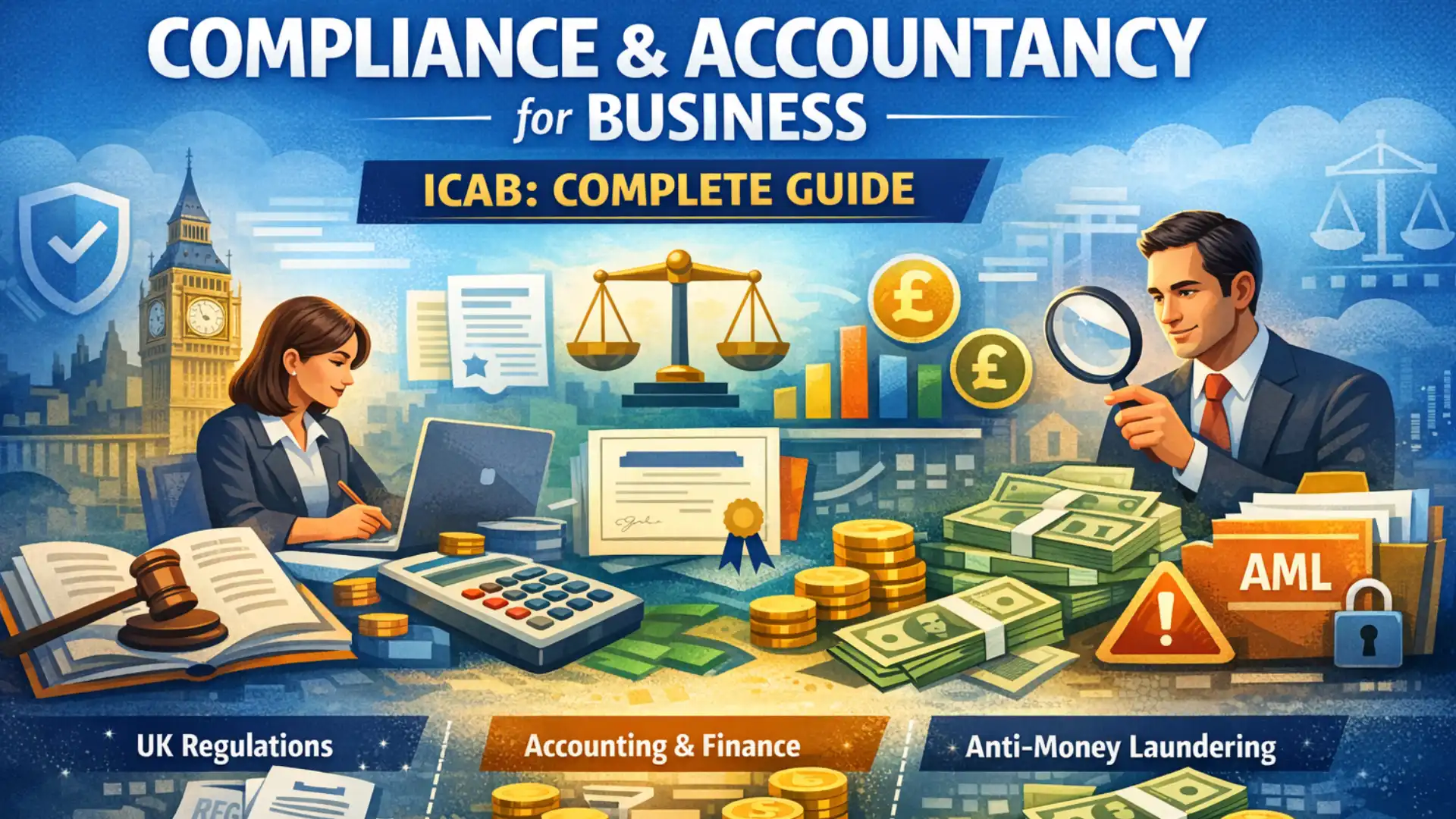
The Introduction to Compliance and Accountancy for Business (ICAB) is a beginner-friendly course bundle that equips learners with essential skills in finance, compliance, and business operations. It’s designed to help you understand how businesses operate legally, ethically, and financially in the UK. ICAB is a comprehensive course bundle that introduces learners to three key areas:
- UK regulations and compliance
- Business accounting and finance
- Anti-Money Laundering (AML)
In simple terms, it teaches you how businesses stay legal, ethical and financially sound.
Why is this important?
Because modern businesses face increasing pressure from regulators. Companies need professionals who understand:
- Legal frameworks
- Financial reporting
- Risk management
- Ethical responsibilities
ICAB helps you build that understanding from scratch.
ICAB Course Structure (What You’ll Learn)
The ICAB programme is divided into three integrated courses, each focusing on a critical area of business operations.
- Introduction to UK Regulations and Professional Integrity
This module focuses on how businesses operate within UK laws and ethical standards.
You’ll learn:
- How UK regulatory frameworks function
- The role of compliance in business
- Legal responsibilities of organisations
- Importance of professional ethics
- Key regulatory bodies
This section builds your compliance mindset, which is essential for any regulated industry.
- Introduction to Accounting and Finance for Business
This module simplifies finance for beginners and makes it practical.
You’ll learn:
- Basic accounting concepts and terminology
- How to read financial statements
- Budgeting and forecasting
- Financial decision-making in business
Even if you’re not from a finance background, this module helps you understand numbers with confidence.
- Anti-Money Laundering (AML)
Financial crime is a major global issue and this module prepares you to handle it.
You’ll learn:
- What money laundering is and how it works
- UK AML laws and compliance requirements
- Risk assessment techniques
- Customer Due Diligence (CDD)
- Suspicious activity reporting
This is one of the most valuable skills in compliance-related careers today.
Key Skills You Will Gain
After completing ICAB, you’ll develop:
Strong understanding of UK regulations
Knowledge of compliance and ethical practices
Basic financial literacy and reporting skills
Ability to assess risks and detect financial crime
Confidence in handling compliance-related tasks
These are job-ready, practical skills-not just theory.
Who Should Take the ICAB Course?
ICAB is designed for a wide range of learners, especially:
- Beginners entering compliance or finance
- Graduates looking for job-ready skills
- Junior accountants and bookkeepers
- AML, KYC and onboarding professionals
- Small business owners
- HR and admin professionals
- Career changers
If you want to enter the UK finance or compliance sector, this course gives you a strong starting point.
Certification and Accreditation
Once you complete the course and pass the exam:
- You receive a digital certificate
- You can request a printed certificate
- The certification is fully accredited
- It has no expiry date
The certification is fully accredited and has no expiry date, ensuring long-term value. For other accredited programs and professional certifications, explore CIFA courses.
Duration, Courses & Pricing
Here’s a quick breakdown:
- Total Duration: 230 hours
- Number of Courses: 3
- Course Fee: £897
Considering it covers three major areas, this bundle offers strong value for money.
Career Opportunities After ICAB
After completing ICAB, you can explore roles such as:
- Compliance Assistant
- AML Analyst
- Junior Accountant
- Risk & Compliance Officer
- KYC Analyst
- Finance Assistant
It also prepares you for advanced certifications in compliance and finance.
ICAB vs Other Certifications (Quick Insight)
Unlike advanced certifications like CFA or ACCA, ICAB is:
Beginner-friendly
More practical and foundational
Faster to complete
Focused on UK compliance + finance basics
It acts as a stepping stone before moving to higher-level qualifications.
Why ICAB is Worth It
Here’s why ICAB stands out:
- Covers compliance + finance together
- Beginner-friendly structure
- Industry-relevant topics (AML, regulations)
- No expiry certification
- Strong career foundation
In short: It prepares you for the real world of business and compliance.
Final Thoughts
The Introduction to Compliance and Accountancy for Business (ICAB) is more than just a course-it’s a career starter. If you want to understand how businesses operate legally, manage finances effectively and prevent financial crime, ICAB gives you everything you need in one structured programme. For more guides, insights, and updates on compliance and finance, check out the CIFA Blog.