
Anti Money Laundering (AML) training is an important part of financial crime prevention, but not every AML course serves the same purpose. Someone completing a short workplace awareness session may receive a training record, while another learner may undertake a structured professional programme involving detailed study, assessments and a certificate.
Both activities involve AML education, yet their objectives, depth and professional significance can be quite different.
This distinction matters when comparing AML training vs AML certification in the UK. Employers need to understand their responsibilities for training relevant staff, while individuals considering professional development need to know exactly what they are purchasing and what their certificate will demonstrate.
A professional AML course can develop knowledge of financial crime risks, customer due diligence, reporting responsibilities and compliance controls. However, completing such a course does not automatically satisfy an employer’s legal training obligations or provide regulatory authorisation.
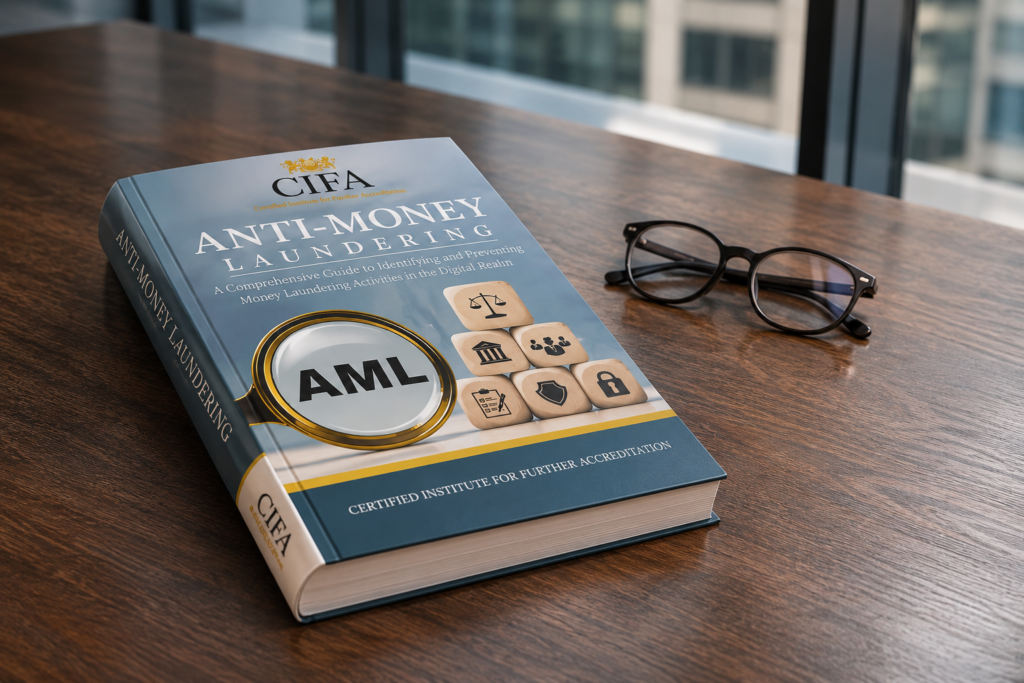
CIFA offers structured AML learning for individuals seeking to develop their professional understanding of financial crime prevention. Its course provides an example of how professional education differs from basic workplace awareness.
This article explains the practical differences, the UK legal position, the meaning of a CIFA certificate and the full cost considerations involved in selecting professional AML training.
AML awareness training introduces employees to the risks of money laundering and the responsibilities relevant to their work.
Its primary purpose is practical. Employees should understand why financial crime controls exist, recognise circumstances that may require attention and know how to respond through their organisation’s established procedures.
For example, an employee involved in customer onboarding may need to recognise inconsistent identification information, unusual ownership arrangements or circumstances requiring further checks.
Someone working in payment operations may instead need to understand transaction-related warning signs and the correct internal escalation process.
Both employees require appropriate knowledge, but their training need not be identical.
Typical workplace training may address:
The emphasis should be on recognising risks and taking the appropriate action within an employee’s responsibilities.
Awareness training does not necessarily require a lengthy academic programme or a formal professional examination. Employers may use induction sessions, digital learning, refresher training, workshops or other suitable methods.
What matters is whether the arrangements provide relevant, effective and appropriately regular training for the people concerned.
A completion record can help demonstrate that training occurred. It does not, by itself, establish that the employee has acquired advanced professional expertise.
Professional AML certification generally refers to a structured learning programme designed to develop more detailed knowledge of anti-money laundering principles and practices.
Unlike introductory awareness training, professional learning may examine the reasons behind compliance controls, the relationship between different regulatory requirements and how financial crime risks are assessed.
Such programmes can involve organised learning materials, defined study hours, knowledge assessments and examinations.
They may be relevant to people working in compliance, financial services, risk management, customer due diligence or related functions.
Professional study can also interest graduates and career changers who want to develop a more systematic understanding of AML.
However, the word certification does not have one universal meaning.
A provider-issued certificate, an accredited CPD course and an Ofqual-regulated qualification are different forms of educational recognition.
The existence of an examination does not automatically make a programme a regulated qualification. Equally, a provider-issued certificate can document meaningful learning without carrying the same status as a formal qualification on a regulated framework.
Readers should therefore investigate the issuing organisation, assessment conditions and recognition status rather than relying on the word certified in a course title.
The central difference between AML awareness training and professional AML certification is their intended purpose.
Awareness training primarily helps employees understand and perform their relevant workplace responsibilities. Professional learning develops broader or deeper subject knowledge through a structured educational programme.
The two approaches can complement one another, but they are not interchangeable.
Comparison | AML Awareness Training | Professional AML Certification |
Main purpose | Support workplace risk awareness and appropriate responses | Develop structured professional AML knowledge |
Intended audience | Relevant employees whose responsibilities involve AML risks | Compliance learners, finance professionals and interested individuals |
Learning depth | Usually focused on practical role-specific requirements | Potentially broader and more detailed |
Structure | Induction, refresher sessions or workplace modules | Organised curriculum and defined learning activities |
Assessment | May involve checks, quizzes or practical evaluation | May include formal assessments or examinations |
Completion evidence | Training records or attendance certificates | Provider-issued achievement certificate or another specified award |
Workplace relevance | Directly linked to employer policies and procedures | Supports wider professional understanding |
Professional development | Maintains relevant workplace awareness | Can contribute to continuing professional development |
Legal responsibility | Part of an employer’s appropriate training arrangements | Does not automatically replace employer training obligations |
Qualification status | Usually not a regulated qualification | Depends on the specific provider and award |
Consider an employee who has completed a professional AML course but joins a new financial institution.
That person may understand customer due diligence, financial crime risks and reporting principles. Nevertheless, they still need to learn their new employer’s procedures, reporting channels, risk appetite and relevant operational controls.
Conversely, someone who has completed workplace AML induction may understand exactly how to escalate concerns internally without having studied AML compliance in significant professional depth.
Neither form of learning should be dismissed.
The appropriate choice depends on whether the immediate objective is workplace competence, broader subject development or both.
Training needs depend on the organisation, its activities, the risks it faces and the responsibilities of individual employees.
In businesses subject to the relevant UK Money Laundering Regulations, employees whose work contributes to compliance or the identification, mitigation, prevention or detection of financial crime risks may fall within the relevant employee definition.
This can include customer-facing staff, onboarding personnel, transaction-monitoring teams, compliance employees and others whose responsibilities expose them to relevant risks.
However, the law does not require every employee in every organisation to complete an identical commercial AML course.
Workplace awareness is particularly important when employees must recognise risks, follow internal procedures or understand changes to relevant responsibilities.
A new employee may need induction training before undertaking certain tasks. Existing staff may require refresher training or additional instruction when procedures, responsibilities or risks change.
Training should be designed around the employee’s actual work rather than delivered solely to produce an attendance certificate.
More structured education may be appropriate for people who want to understand AML beyond their immediate tasks.
An employee moving towards compliance responsibilities may benefit from studying risk assessment, reporting frameworks and the wider regulatory environment.
A graduate exploring financial crime prevention may value an organised introduction to the subject.
An experienced professional may use structured learning to revisit concepts, address knowledge gaps or document continuing professional development.
CIFA’s educational offering provides one possible route. Readers can explore the distinctions between different forms of educational recognition in the CIFA recognition and accreditation guide.
Professional learning can support development, but employers remain responsible for deciding whether an individual’s knowledge and experience meet the requirements of a particular position.
UK AML training responsibilities are governed in part by Regulation 24 of the Money Laundering, Terrorist Financing and Transfer of Funds (Information on the Payer) Regulations 2017, as amended.
Regulation 24 requires relevant businesses to take appropriate measures to ensure relevant employees receive suitable awareness and regular training.
The current provision addresses awareness of relevant laws concerning money laundering, terrorist financing, proliferation financing and applicable data protection requirements.
It also requires regular training in recognising and dealing with transactions, activities or situations that may be associated with financial crime.
Relevant businesses must maintain written records of the measures taken and the training provided.
The provision also covers certain agents whose work falls within its scope.
Regulation 24 requires organisations to consider the nature and size of their business and the nature and extent of relevant financial crime risks.
This supports a risk-based approach rather than an assumption that every employee needs identical training.
For example, a specialist responsible for reviewing complex financial transactions may require substantially different instruction from an employee whose main responsibility is recognising concerns and referring them internally.
An organisation should consider whether its training reflects current risks, actual responsibilities, internal procedures and applicable supervisory expectations.
Training records are important, but the existence of a record alone does not establish that the training was adequate.
No. Completing one CIFA course or receiving one CIFA certificate does not automatically fulfil an employer’s Regulation 24 obligations.
A professional course may contribute useful knowledge to an employee’s development. It cannot independently establish that every relevant member of staff has received appropriate and regular organisation-specific training.
The employer must still assess training needs, communicate relevant policies, maintain appropriate records and ensure its arrangements reflect the business and its risks.
A professional certificate is therefore evidence of educational achievement, not a blanket declaration of legal compliance.
CIFA provides a structured digital Anti Money Laundering course for individuals interested in developing professional knowledge of financial crime prevention.
The published CIFA Anti Money Laundering course is priced at £499 and is described as an Intermediate programme with a Level 4 label.
Its current course information identifies 40 CPD hours, English-language delivery and six chapters.
The curriculum addresses AML fundamentals, risk assessment and customer due diligence, suspicious activity reporting, compliance programmes, sanctions and terrorist financing, and current developments in AML.
These subjects are organised into a defined learning sequence rather than delivered as a short workplace awareness briefing.
The standard course includes e-book materials and chapter-based mock examinations.
Mock examinations allow learners to review their understanding and identify areas requiring further study before attempting the relevant final assessment.
CIFA also advertises lifetime portal access, subject to its current terms, and a Digital Profile.
The Digital Profile provides a way to present relevant learning information, although it should not be confused with professional registration or regulatory approval.
The advertised 40 CPD hours describe the published learning commitment. They do not guarantee that every learner will complete the programme within a particular number of days.
CIFA states that learners receive a Certificate of Achievement after successfully completing the course and passing the required examination.
The certificate is not awarded merely because someone pays the enrolment fee.
For a detailed discussion of individual curriculum areas and course arrangements, readers can consult Anti Money Laundering: A Complete CIFA Course Guide.
That resource provides the course-specific detail, while the distinction here remains between workplace awareness and professional learning.
A CIFA AML Certificate of Achievement is a provider-issued CPD certificate documenting successful completion of the relevant educational programme and its applicable assessment requirements.
It can provide evidence that a learner has undertaken structured study and satisfied CIFA’s conditions for the award.
However, its meaning should not be extended beyond those conditions.
Continuing Professional Development, or CPD, concerns the ongoing development of professional knowledge and skills.
CIFA explains its approach to CPD and its relationship with the CPD Certification Service through its official CPD accreditation information.
CPD accreditation and regulated qualification status are different matters.
An Ofqual-regulated qualification forms part of a defined regulatory system involving recognised awarding organisations and regulated qualifications.
A provider-issued CPD Certificate of Achievement should not be described as an Ofqual-regulated qualification unless that specific status is established through the relevant official regulatory records.
CIFA uses a Level 4 label for its AML programme, while the individual course page describes its learning level as Intermediate.
The Level 4 label must not be interpreted as confirmation that the course is an RQF Level 4 qualification.
A course provider’s level description and a qualification’s formal position within the Regulated Qualifications Framework are separate matters.
Learners who specifically require an RQF qualification should check the relevant official qualification record and awarding organisation before enrolling.
CIFA provides an online certificate verification facility.
Verification helps establish the authenticity of a certificate issued by the provider.
It does not independently demonstrate that the holder is authorised to undertake regulated activities, meets every employer’s competency requirements or has completed all relevant workplace training.
These distinctions are essential when presenting professional learning accurately on a CV or discussing it with an employer.
The cost of AML learning depends on the provider, the type of programme, the assessment arrangements and the learning resources purchased.
Workplace awareness training may be provided directly by an employer. Its cost and delivery arrangements differ from purchasing an individual professional course.
For CIFA’s standalone AML programme, the current published enrolment fee is £499.
However, the enrolment fee is not the same as the total possible expenditure.
The official CIFA course price list separates enrolment, optional study support and examination-related charges.
Cost component | Published charge | Explanation |
AML course enrolment | £499.00 | E-book, mock examinations, Digital Profile and listed enrolment benefits |
Additional study-support package | £72.00 | Separately priced prerecorded webinars and PowerPoint presentations |
First examination attempt | £149.99 | Published examination fee per course |
Online proctoring | $16.00 | Published invigilation charge per examination |
Examination resit | $16.00 | Published resit charge per examination |
Printed certificate | Confirm with CIFA | Optional physical delivery may involve a separate charge |
The published prices use both pounds sterling and US dollars. Learners should confirm payment currency, conversion arrangements and any applicable payment-processing charges before purchasing.
Based on the published charges, the standard course enrolment and first examination fee total:
£499 + £149.99 = £648.99
Adding the optional £72 study-support package produces:
£648.99 + £72 = £720.99
These totals exclude the separately listed $16 online proctoring charge, any applicable resit, optional printed certificate delivery and other charges that may apply.
The figures are therefore not an unconditional final checkout quotation.
The £72 study-support package should not be confused with the standard e-book and mock examinations already identified within enrolment.
Before paying, readers should review the CIFA Terms and Conditions and confirm the charges and access conditions applying to their selected course.
The CIFA Introduction to Compliance and Anti-Money Laundering (ICAM) bundle combines two courses:
This makes ICAM broader than the standalone AML course.
The additional course introduces wider financial regulation, governance, professional conduct and related regulatory principles.
CIFA’s published ICAM certification bundle costs £799.
Learning option | Published enrolment fee |
Anti Money Laundering | £499 |
UK Financial Regulation and Professional Integrity | £358 |
Combined standalone enrolment fees | £857 |
ICAM bundle enrolment | £799 |
Difference | £58 |
The calculation is straightforward:
£499 + £358 = £857
£857 – £799 = £58
Based on the verified published enrolment prices, purchasing ICAM represents a £58 difference compared with purchasing the two constituent courses separately.
This is an enrolment-fee comparison, not a guarantee that the bundle’s complete assessment and support costs will be £58 lower.
CIFA’s published price list identifies a £180 additional study-support package for ICAM.
It also lists examination fees per course and proctoring charges per examination.
Because ICAM contains two courses, learners should confirm how many separately charged examinations apply, whether any package-specific arrangements affect the calculation and what the final checkout includes.
If the published £149.99 first-attempt fee applies separately to both courses, the examination fees would total £299.98.
That would produce a conditional enrolment-plus-examination subtotal of £1,098.98, excluding proctoring and optional support.
The relevant assessment and payment arrangements should be confirmed with CIFA before relying on this subtotal.
Someone interested exclusively in AML may not need the additional regulatory course.
Conversely, a learner who wants to understand both financial crime prevention and the wider UK financial regulatory environment may find ICAM more relevant.
The best value depends on whether both courses contribute to the learner’s objectives, not simply on the £58 difference.
Selecting suitable AML education begins with identifying the reason for studying.
For employees, the first consideration should be the training their employer requires for their responsibilities.
For individuals pursuing professional development, the decision may involve curriculum depth, assessment, learning format and the type of certificate available.
If your immediate responsibility is to recognise suspicious activity and follow internal procedures, appropriate workplace awareness training may be the most relevant starting point.
If you want a more detailed understanding of AML frameworks and professional compliance concepts, structured learning may be appropriate.
Ask who issues the certificate, what assessments are required and whether it is a provider-issued CPD award or a regulated qualification.
Do not assume that the word Level 4 establishes formal RQF recognition.
Review enrolment, examination, proctoring, resit and optional support charges.
A lower advertised enrolment fee may not represent a lower overall cost if essential assessment expenses are charged separately.
CIFA identifies its AML programme as Intermediate.
Learners unfamiliar with financial services terminology should assess whether the curriculum suits their current understanding and whether introductory preparation would be beneficial.
A course should be selected for its relevance to actual responsibilities and development needs.
Professional education may help strengthen knowledge, but it does not automatically confer appointment to a compliance position or remove the need for workplace-specific training.
The distinction between AML training vs AML certification is ultimately a distinction between different learning purposes.
Workplace AML awareness training helps relevant employees understand financial crime risks and respond appropriately within their organisation.
Professional AML learning provides an opportunity to develop more structured subject knowledge, undertake assessments and document educational achievement.
Both can be useful, but neither should be mistaken for the other.
UK Regulation 24 places responsibilities on relevant businesses to provide appropriate and regular training. A professional certificate does not automatically discharge those obligations.
Similarly, a provider-issued CPD Certificate of Achievement should be understood accurately and not confused with an Ofqual-regulated qualification or regulatory authorisation.
CIFA offers a structured AML programme and the broader ICAM bundle for learners considering professional development. Its published course features, examination arrangements and separate charges provide a basis for informed comparison.
Before enrolling, the most sensible approach is to identify the learning needed, verify the certificate’s status and understand the full financial commitment.
The right AML course is not necessarily the longest or most expensive. It is the one that addresses a genuine learning need and accurately represents what successful completion will achieve.
AML awareness training focuses on recognising financial crime risks and following workplace procedures. Professional AML certification generally involves more structured learning, broader subject coverage and assessment. The resulting certificate may document educational achievement, but it does not automatically replace employer-provided training or constitute a regulated qualification.
Relevant employees of businesses subject to UK AML requirements must receive appropriate awareness and regular training. This can include people involved in onboarding, transactions, risk assessment or compliance. The content depends on their responsibilities and the organisation’s risks. Not every employee requires identical training, and businesses must assess their obligations.
No. UK AML requirements do not impose a universal obligation for every employee to purchase professional AML certification. Employers must provide appropriate training to relevant staff. Individuals seeking broader regulatory knowledge may consider CIFA’s UK Financial Regulation and Professional Integrity course, depending on their development needs.
CIFA’s AML course provides structured digital learning across six chapters, with 40 CPD hours, chapter-based mock examinations and a Digital Profile. A Certificate of Achievement follows successful completion and examination. Learners interested in wider regulation can compare the separate FCA/PRA and Investment Risks programme.
A CIFA AML Certificate of Achievement records successful completion of the provider’s course and applicable assessment requirements. It is evidence of structured CPD learning, not automatic professional authorisation. Learners should understand its issuing body, assessment conditions and relevance to their goals. CIFA’s student learning and support guide provides further context.
No. The CIFA AML Certificate of Achievement is a provider-issued CPD certificate and should not be represented as an Ofqual-regulated qualification. CPD accreditation and formal qualification regulation are different systems. Learners who require a particular regulated award should verify the qualification and awarding organisation through the appropriate official records.
No. A provider’s Level 4 course description does not automatically establish RQF Level 4 qualification status. CIFA describes its AML course as Intermediate and uses a Level 4 label. These descriptions must be distinguished from formal regulated qualifications. The CIFA Level 4 compliance learning guide discusses this distinction further.
No. Completing a CIFA course does not automatically fulfil an employer’s Regulation 24 obligations. Relevant businesses must ensure appropriate and regular employee training, considering their activities, risks and responsibilities. They must also maintain required training records. Professional learning can support employee knowledge but cannot independently replace organisation-specific compliance arrangements.
No. CIFA lists the £499 enrolment separately from its £149.99 first-attempt examination fee, $16 proctoring charge and £72 optional study-support package. Its price list also identifies a $16 resit charge per examination. Learners should contact CIFA about current fees to confirm their complete payable amount and any applicable conditions.
Yes, based on the verified published enrolment prices. The standalone AML course costs £499 and UK Financial Regulation and Professional Integrity costs £358, totalling £857. ICAM is listed at £799, a difference of £58 before additional charges. The CIFA ICAM course comparison provides further context, while current fee inclusions should be checked before payment.
CIFA is a trusted education provider specializing in finance and compliance training. We empower learners with practical knowledge, industry-relevant skills, and accredited courses designed to build strong careers in financial services, risk management, and regulatory compliance.
© CIFA 2020-2025 ALL RIGHTS RESERVED