
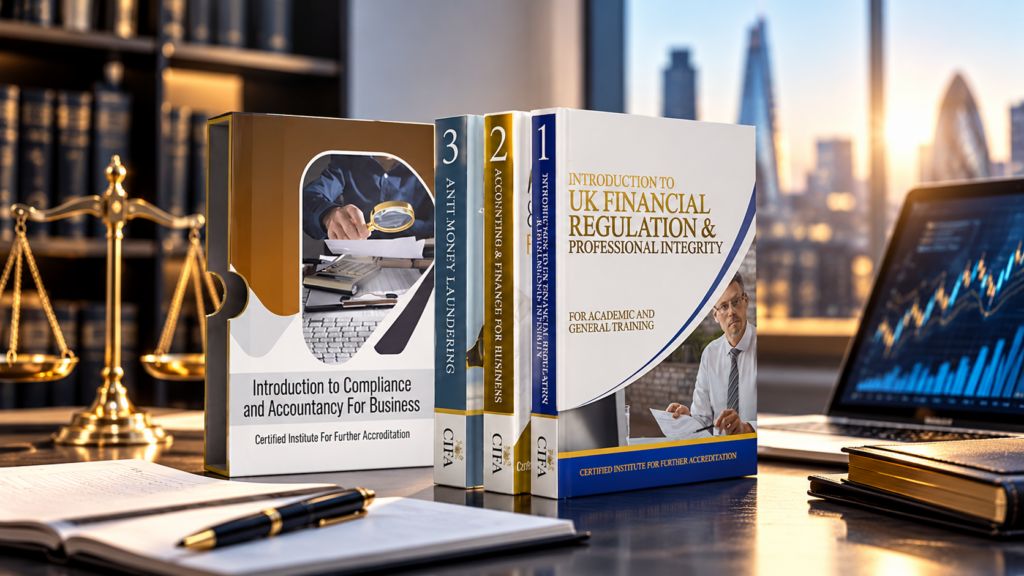
If you want a structured, CPD-accredited route into compliance, CIFA’s Level 4 compliance pathways are designed for exactly that. Start with the ICAM certification (£799), broaden your knowledge with the FinTech and Compliance Certification (£897), or begin with the FCA/PRA and Investment Risks bundle (£599). You can read our overviews of the ICAM pathway, the Anti Money Laundering course and the FCC pathway on this blog, then compare costs on the CIFA price list. These programmes are CPD-accredited rather than Ofqual-regulated, and completing one does not authorise you to carry out FCA-regulated activities.
Ask a recruiter in financial services what they struggle to find, and compliance knowledge comes up again and again. Banks, fintechs, lenders, wealth managers, accountancy firms and payment providers all need people who understand regulation, can spot financial crime risk and know how to document their decisions.
That demand is why so many career changers, graduates and existing finance staff search for a Level 4 certification in compliance. They want something more substantial than a short awareness module, but more flexible than a full-time degree. CIFA was built for that gap. Our courses are delivered online, assessed by exam, supported by CPD accreditation and backed by employability tools that help you present your learning to employers.
This guide works as a roadmap. It explains what Level 4 means, what a compliance professional actually does, what you will learn, how CIFA’s pathways compare, and what to do next. If you would like to explore more topics first, browse the full CIFA Blog articles.
Qualification levels describe how deep and demanding learning is. Level 4 is broadly comparable to the first year of an undergraduate degree. It assumes you can absorb specialist concepts, apply them to realistic situations and explain your reasoning.
For compliance, that translates into a clear difference between two kinds of learning:
If you have already read our Anti Money Laundering course guide, you will recognise this progression from awareness to applied understanding.
It is important to be clear about what a CIFA certification is. CIFA’s Level 4 programmes are CPD-accredited, which means an independent body has reviewed them against professional development standards. They are not Ofqual-regulated qualifications, and recognition can differ between employers and professional bodies.
Completing a CIFA certification also does not give you FCA approval, and it does not authorise you to perform regulated functions on its own. Some roles require specific regulatory approvals or qualifications on top of training.
What you do gain is structured, assessed and documented learning that demonstrates real knowledge and a commitment to professional development. For a deeper look at this topic, read why CPD accreditation and Level 4 training matter.
Theory makes more sense when you can picture it. Here are three simplified situations that compliance professionals face, and the knowledge behind each one.
A small import company wants to open an account. Before anything else, the firm must confirm who the company is, who owns and controls it, and what the relationship will be used for. The compliance team checks identity documents, identifies the people behind the company, screens them against sanctions lists and politically exposed person databases, and assigns a risk rating.
Skills involved: customer due diligence, beneficial ownership, risk rating, sanctions screening. You will study all of these in the Anti Money Laundering course.
An existing customer who normally makes small payments suddenly receives a large transfer from an unfamiliar overseas source and sends most of it onward within days. Nothing is automatically illegal, but the pattern is unusual for this customer.
Under the updated rules, firms are expected to judge whether activity is unusual in context, looking at the customer, the sector, the value and the structure, rather than treating every complex transaction as high risk. A compliance professional reviews the activity, gathers more information and decides whether enhanced due diligence or a report is needed.
Skills involved: ongoing monitoring, contextual risk assessment, enhanced due diligence, documentation.
After review, a team member cannot find a plausible explanation. They follow the firm’s internal reporting procedure and pass the concern to the nominated officer, who decides whether to report to the National Crime Agency. Throughout, nobody alerts the customer, because tipping off is a criminal offence.
Skills involved: suspicious activity reporting, understanding the roles of the nominated officer and money laundering reporting officer, confidentiality and legal duties.
These scenarios show why compliance is a thinking job as much as a rules job. A good certification trains you to ask the right questions, not just recite definitions.
CIFA’s compliance bundles are built around two core courses, with optional extensions depending on the pathway you choose.
Introduction to UK Financial Regulation & Professional Integrity gives you the regulatory context. You learn how the FCA and PRA operate, how firms are supervised, and why professional conduct and integrity sit at the heart of financial services.
Anti Money Laundering gives you the technical toolkit. It covers detecting, preventing and reporting money laundering and terrorist financing, including risk assessment, customer due diligence, suspicious activity reporting and sanctions compliance. The course leads to a CIFA examination.
Across the programmes, you build knowledge in areas such as:
UK anti-money laundering rules were updated in 2026 through amendments to the 2017 Regulations. Most changes came into force at the end of June 2026. The amendments introduced new obligations for cryptoasset businesses and credit institutions, moved monetary thresholds from euros to sterling and reformed the trust registration regime.
For people entering compliance, three points are worth remembering:
Rules like these are the reason compliance training should never be a one-off exercise. When you evaluate any course, ask how the provider keeps content current, and always confirm the latest position with official guidance.
Each CIFA pathway has a dedicated overview on this blog and an enrolment page on cifa.ac. Prices were listed at the time of writing and may change, so check the price list before you decide.
Pathway | Courses | Price | Read the overview | Enrol |
ICAM | 2 | £799 | ||
FCC | 3 | £897 | ||
ICAB | 3 | £897 | ||
FCA/PRA and Investment Risks | 2 | £599 | ||
ESG and Compliance | 3 | £897 |
ICAM pairs UK financial regulation with anti-money laundering across 200 hours of study. It is the most direct route if your goal is a KYC, onboarding or junior compliance role.
The FCC adds Introduction to Investment, Risk and Taxation to the ICAM foundation, creating a 410-hour pathway. You can learn more in our guide to the Investment, Risk and Taxation course. It suits learners drawn to fintech or those who want to understand the products behind the controls.
ICAB combines compliance with accounting and finance for business. Read about the Accounting and Finance for Business course if you work in or want to join a finance team.
At £599, this two-course bundle is the most accessible way to learn how UK financial regulators work and how investment risk is viewed.
If responsible investment interests you, explore our guide to Navigating ESG Investments alongside the ESG compliance pathway.
Use these quick prompts to narrow it down:
Not sure? Contact CIFA for guidance, or browse the CIFA FAQs.
Most compliance learners are already working, so CIFA’s model is built around flexibility.
Learn at your own pace. Materials are online, so you can fit study around work and family. As a rough guide, ICAM’s 200 hours takes about 20 weeks at 10 hours a week, and the FCC’s 410 hours takes about 41 weeks at the same pace. Your own timeline will vary.
Sit your exam when you are ready. CIFA’s online exams can be taken from home, with identity verified through facial recognition. See the exam information page for the process.
Track your progress. Course tracking shows how far you have come, which helps you stay motivated.
Share a verifiable certificate. Employers can confirm your credentials on the certificate verification page.
A certificate helps most when employers can see it quickly and trust it. CIFA’s tools are designed for that:
When you add your certification to a CV or professional profile, use its full name, the issuing body and the completion date, and describe it accurately as CPD-accredited. Then connect the learning to practice. Mention skills such as KYC, customer due diligence and suspicious activity reporting, and give an example of how you applied them, whether in a current job, a volunteer role or a project.
For more on how these roles work, read our article on FinTech compliance jobs in the UK.
Compliance salaries vary widely by employer, city and experience, so treat any figure as a guide. Entry-level KYC and compliance analyst roles commonly start in the high £20,000s to mid £30,000s, with progression into the £40,000s and £50,000s as experience builds, particularly in London and at larger firms. Compliance officers with several years of experience often earn considerably more, and senior accountable roles can pay higher still.
A Level 4 certification helps you get started and shows commitment. Progress after that depends on practical experience, strong work, ongoing learning and, for some roles, additional regulatory qualifications. Plan your pathway around the specific roles you want rather than assuming one certificate will open every door.
Whichever provider you consider, check that:
Compliance is a team responsibility. CIFA corporate training lets employers enrol staff and monitor progress in real time, which supports training records and helps identify knowledge gaps before they turn into risks. It is a practical option for firms that need consistent standards across onboarding, operations and compliance teams, especially when rules change and materials need refreshing.
A Level 4 certification in compliance can be a flexible, credible way to build knowledge that UK financial services employers look for. Choose the pathway that matches where you are starting from, understand exactly what CPD accreditation means, keep your learning current and pair your certificate with real experience.
Whether you begin with the ICAM certification, build wider skills with the FCC or mix your own pathway from the full CIFA course list, you will be investing in knowledge that supports long-term career growth.
Ready to start? Explore CIFA’s compliance certifications or speak to the CIFA team today. To keep learning, visit CIFA Blog for more guides on finance education and careers.
No. CIFA’s certifications are CPD-accredited, which means they have been independently reviewed against professional development standards. This is different from Ofqual-regulated status, and recognition can vary between employers and professional bodies.
The ICAM bundle is a strong starting point because it pairs UK financial regulation with anti-money laundering in a structured two-course pathway. You can read the ICAM overview first.
At the time of writing, ICAM is listed at £799, the FCC at £897 and the FCA/PRA bundle at £599. Prices can change, so check the CIFA price list for current figures.
ICAM is listed at 200 hours and the FCC at 410 hours. Because learning is online and self-paced, your timeline depends on how many hours you can study each week. At 10 hours a week, ICAM takes roughly 20 weeks.
Yes. The amended regulations came into force at the end of June 2026 and changed areas such as enhanced due diligence and reporting duties. Compliance professionals should keep learning as rules evolve and confirm the latest requirements through official guidance.
Exams are taken online, with identity verified through facial recognition, so you can sit them from home. See the exam information page for details.
No certification can guarantee employment. It can strengthen your application by showing knowledge and commitment, particularly alongside relevant experience and tools like the CIFA Digital CV.
No. A CPD-accredited certification does not grant FCA approval or authorisation to carry out regulated activities. Some roles require specific regulatory qualifications or approvals in addition to training.
Yes to both. Employers can check certificates on the verification page, and organisations can use CIFA corporate training to enrol teams and monitor progress.
CIFA is a trusted education provider specializing in finance and compliance training. We empower learners with practical knowledge, industry-relevant skills, and accredited courses designed to build strong careers in financial services, risk management, and regulatory compliance.
© CIFA 2020-2025 ALL RIGHTS RESERVED